
Using Paasa
How to Transfer RSUs from UBS to Paasa
Learn how to transfer UBS RSUs or ESPP shares to Paasa, either in-kind or after selling, with step-by-step instructions for both methods.

Abhighyan Sinha

If your RSUs or ESPP shares are held with UBS Equity Plan Advisory Services, you have two ways to move value from UBS to your Paasa global investment account: transfer the vested shares themselves without selling first, or sell on UBS and transfer the cash proceeds.
Both processes run through UBS One Source rather than a fully self-serve online flow, and both eventually land in your Paasa app, ready to be reinvested across global stocks, UCITS ETFs, or managed strategies, or withdrawn to any bank account in your name.
This guide covers both paths. For how RSU transfers work in general, see whether you can transfer your RSUs to another broker.
Table of contents
- Transferring shares (in-kind)
- Transferring sale proceeds (cash)
- A note on UMB Bank and JPMorgan Chase
- About Paasa
Transferring shares from UBS to Paasa
Step 1: Open the Paasa app and tap "Transfer investments"
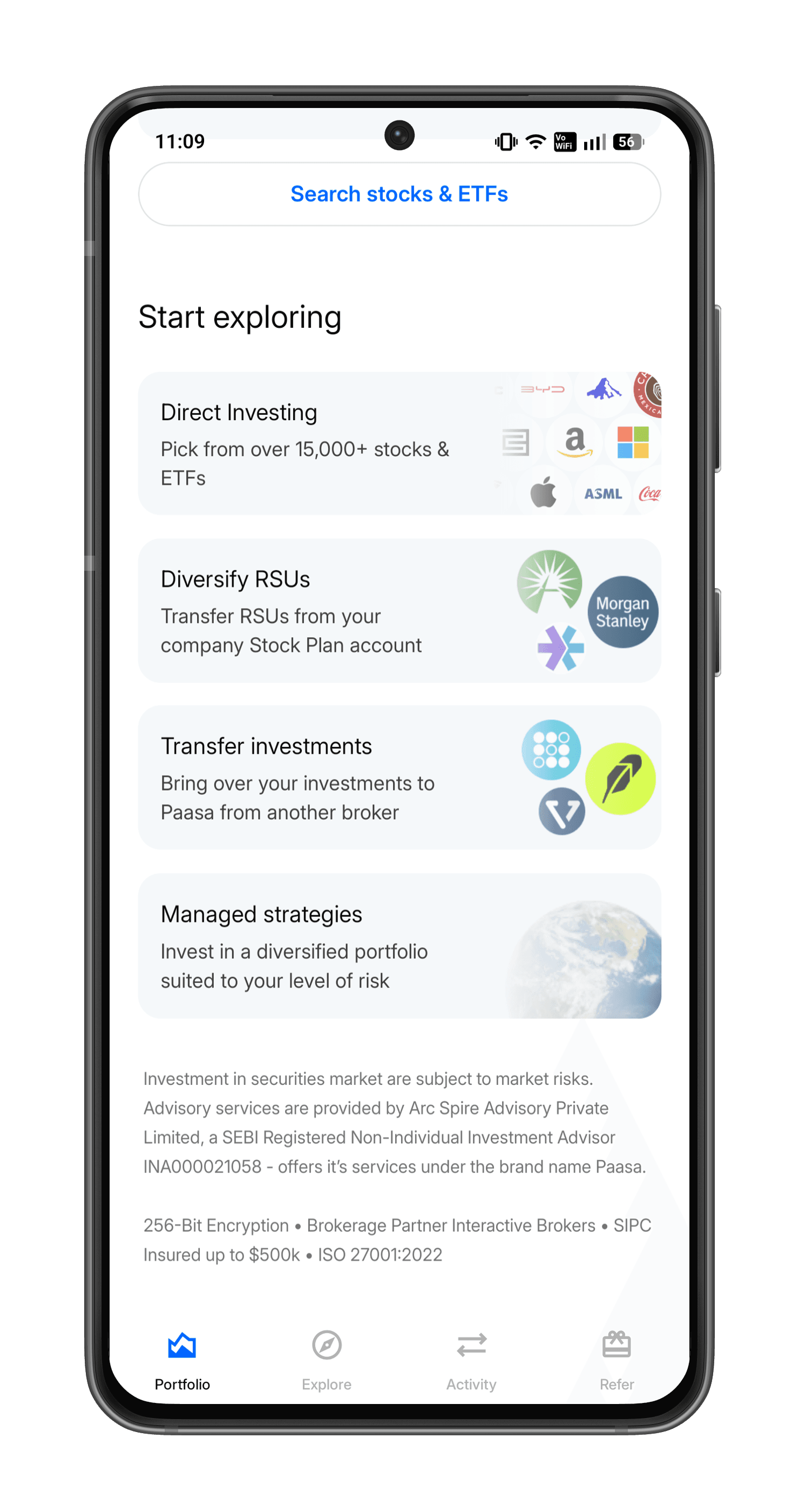
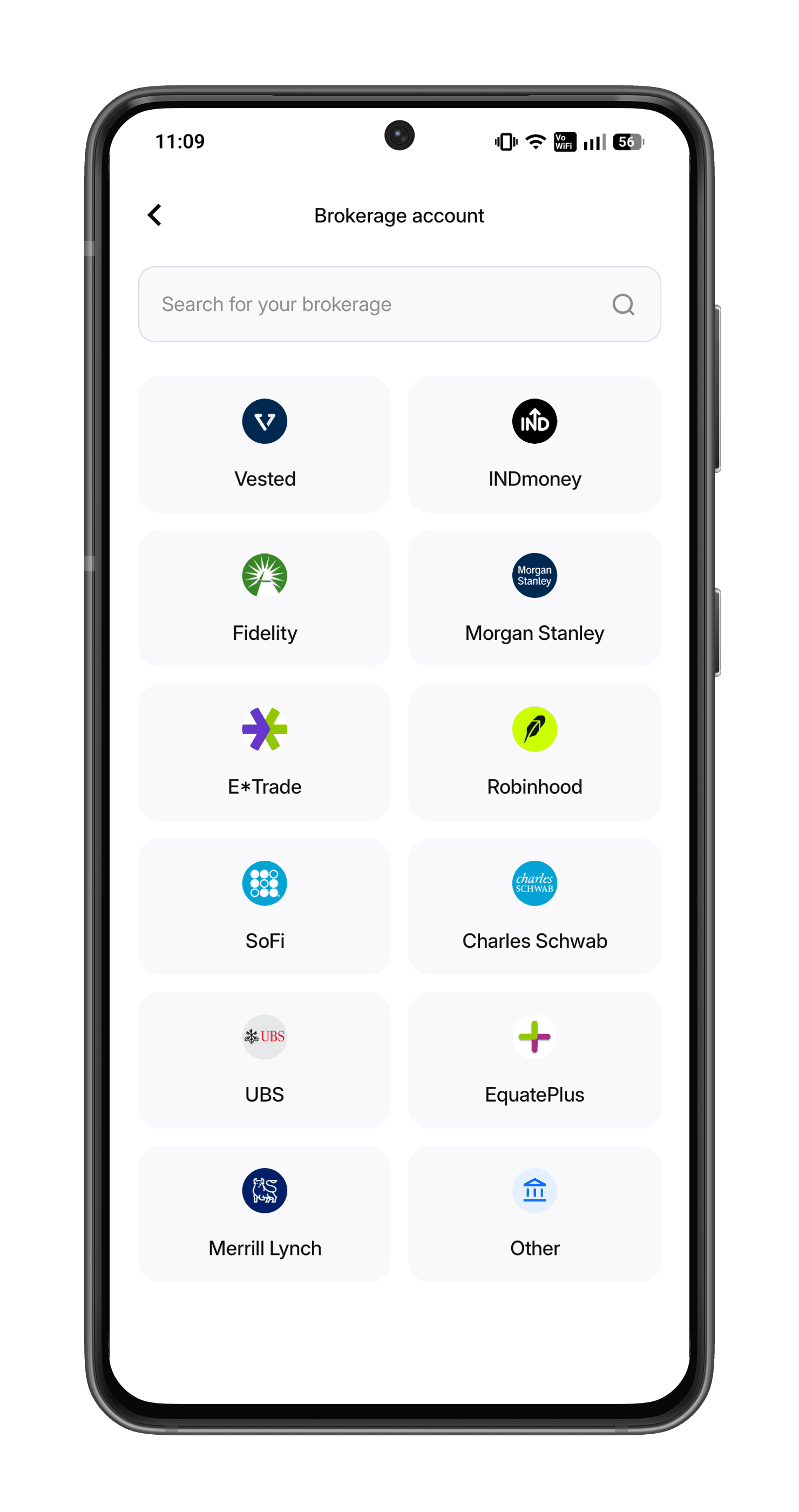
Step 2: Select your broker
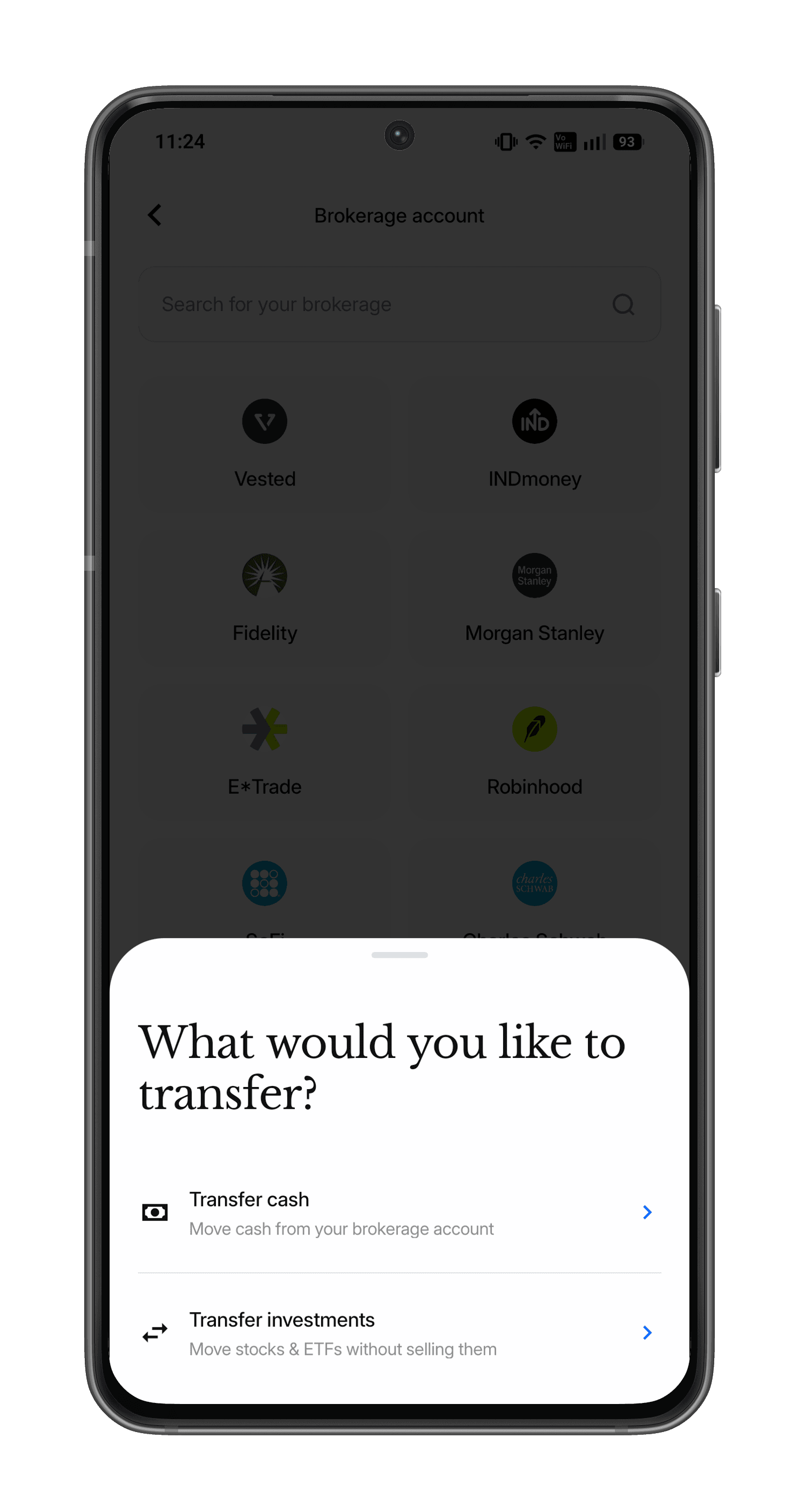
Step 3: Select your type of transfer
You can transfer investments without selling (from your brokerage account and also your employer RSU account) as well as any cash you have in your UBS account.
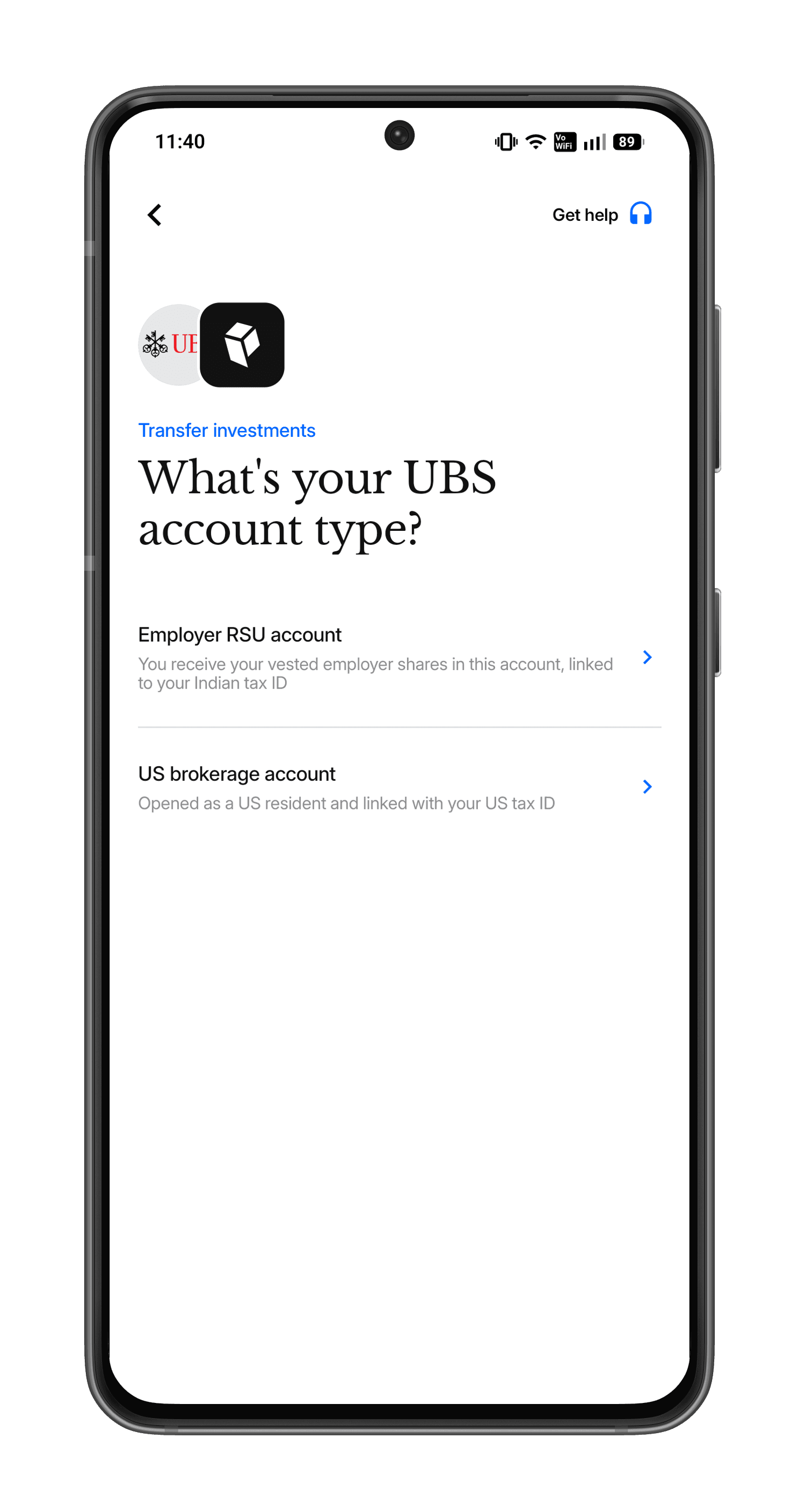
Step 4: Select your account type
Select your account type between Employer RSU account and US brokerage account.
Step 5: Follow the step-by-step on-screen instructions to complete your transfer.
What to send us next
Once your transfer is complete, send the following to support@paasa.com:
- Your account statements
- Vesting dates and details for each holding
This backfills your portfolio graph and XIRR, and lets Paasa track the cost and gains on each holding correctly.
Transferring sale proceeds from UBS to Paasa
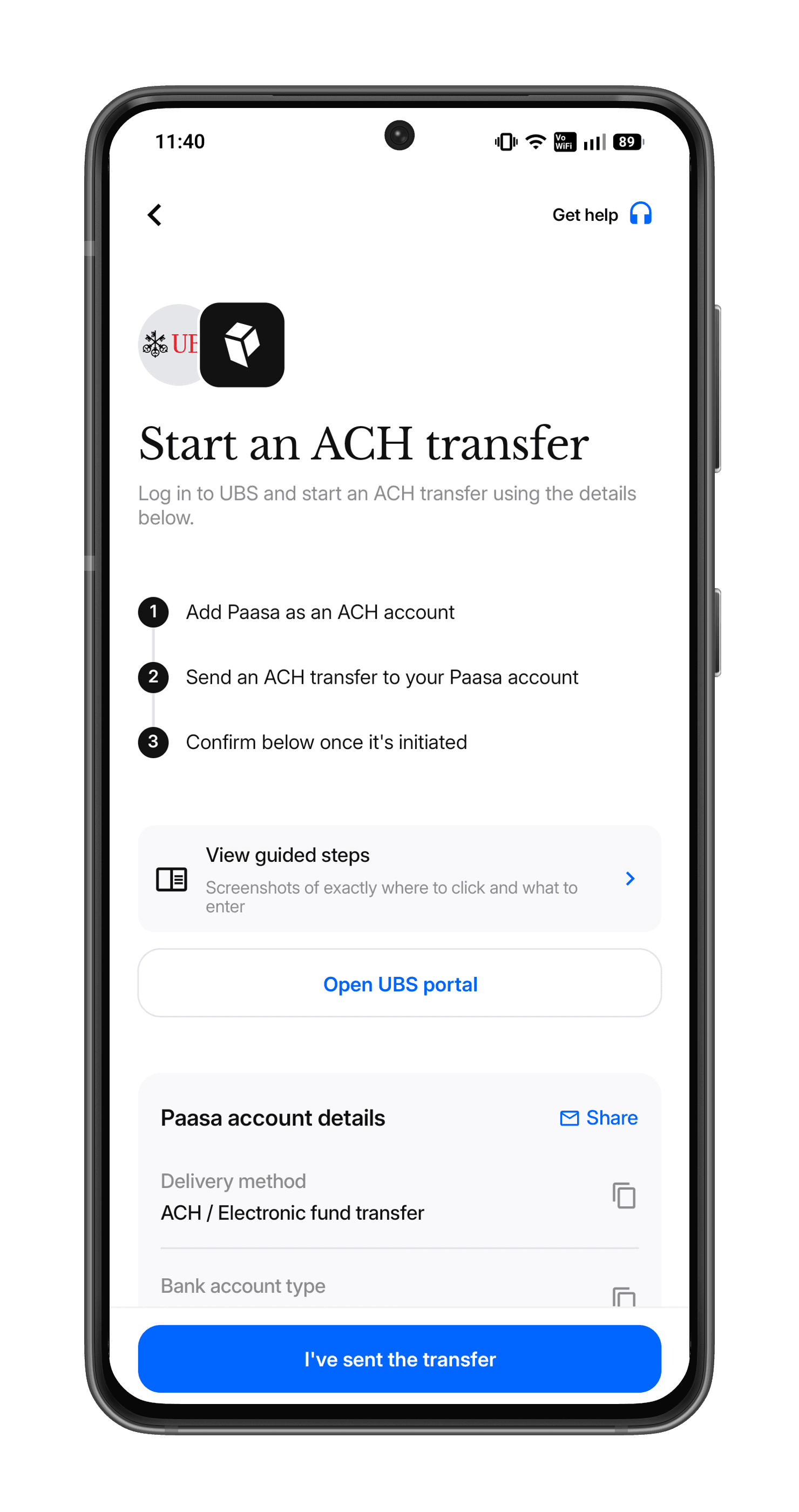
If you've already sold your shares on UBS, or would rather sell first, you can move the cash directly to your Paasa-linked bank account by ACH.
Step 1: Open the Paasa app and tap "Transfer investments"
Step 2: Select your broker
Step 3: Select your type of transfer
You can transfer investments without selling (from your brokerage account and also your employer RSU account) as well as any cash you have in your UBS account.
Step 4: Follow the on-screen instructions
A note on UMB Bank and JPMorgan Chase
UBS Financial Services is a wealth management firm and broker-dealer, not a retail bank, so it doesn't connect directly to the Federal Reserve's ACH network. Instead, it relies on third-party institutions to handle cash sweeps, check clearing, and ACH processing.
UMB Bank, National Association issues the routing number and processes the checking/ACH functions on behalf of UBS and similarly structured brokerages like Morgan Stanley.
JPMorgan Chase acts as the core settlement and custody partner for UBS's broader investment platform, handling the macro-level settlement and cash-routing flows behind the scenes.
This is why your transfer routes through these institutions rather than UBS directly, it's standard practice for brokerage-held cash, not a sign of anything unusual.
Need Assistance?
If you'd like our team to walk you through either process or have any questions around tax or compliance, reach out at support@paasa.com.
About Paasa
Paasa is a global investing platform built specifically for Indian residents and returning NRIs. We provide direct access to markets across 11 countries, including the United States, United Kingdom, Switzerland, Hong Kong, Germany, France, Canada, Netherlands, Japan, and Singapore, and support 9 global currencies.
Seamless "In-Kind" Transfers (ACATS): You can move your entire US stock portfolio (from brokers like Robinhood, Schwab, Fidelity, E*TRADE, and more) directly to Paasa. This allows you to consolidate your assets in one place without triggering a tax event.
The Compliance Advantage: Paasa provides the exact reports you need for your Indian tax returns and foreign asset disclosures, eliminating the need for manual calculations.
Estate Tax Protection: Paasa offers access to Ireland-domiciled (UCITS) ETFs, allowing you to legally shield your long-term investments from the 40% US Estate Tax that applies to non-residents.
Frequently Asked Questions
Should I transfer my shares in-kind or sell first and transfer the cash?
Transferring in-kind avoids triggering a sale event on the UBS side and lets you decide when to sell once the shares are in Paasa. Transferring cash makes sense if you've already sold, or want your rupee-side plans to move faster than the eight-business-day share transfer.
Do I need to sell my shares on UBS before transferring?
No. You can transfer your vested shares directly to your Paasa account in-kind, meaning you do not have to sell them first.
How long does the UBS share transfer take?
UBS states it takes approximately eight business days from trade date to process an electronic transfer request.
What bank details do I use for the ACH cash transfer?
Use the routing number and account number that Paasa provides, with the account type set to Checking. You can find all of this information in the Paasa app.
Why does the ACH transfer route through UMB Bank and JPMorgan Chase instead of UBS directly?
UBS is a broker-dealer, not a retail bank, so it doesn't connect directly to the Federal Reserve's ACH network. UMB Bank processes the checking/ACH functions and JPMorgan Chase handles settlement and custody on UBS's behalf. This is standard practice, not a sign of anything unusual.
What can I do with the shares or cash once they reach Paasa?
Once received, you can hold, invest in markets across 11 countries, or withdraw the funds to your bank account.
Can I withdraw the money to my Indian bank account?
Yes. After selling your shares on Paasa, or once your ACH transfer arrives, you can withdraw the proceeds to any bank account in the world, provided the account is in your name.
Does Paasa help with tax reporting for these transfers?
Yes. Paasa provides the exact reports you need for your Indian tax returns and foreign asset disclosures (Schedule FA), eliminating the need for manual calculations.


Invest in global markets from India

Discussion
Disclaimer
The information provided in this post is for general informational purposes only. It is not intended as professional advice or to replace consultation with qualified professionals. While we strive to ensure the accuracy and reliability of the information presented, we make no representations or warranties of any kind, express or implied, about the completeness, accuracy, reliability, suitability, or availability with respect to the content contained herein. Any reliance you place on such information is therefore strictly at your own risk. We disclaim any liability for any loss or damage, including, without limitation, indirect or consequential loss or damage, or any loss or damage whatsoever arising from loss of data or profits arising out of, or in connection with, the use of this post. Always seek the advice of professionals or relevant authorities regarding your specific situation or circumstances.