



For Indian investors, getting pure exposure to Zinc is difficult. Domestic options are limited to single-stock equity bets that carry significant corporate and regulatory risks.
This guide details the Best Zinc ETFs available on global markets and provides a regulatory framework for Indian residents to invest in the commodity price directly.
Table of contents
Why are investors looking at zinc exposure?
Every time a country builds a bridge, a wind farm, or a power grid, they need zinc to prevent corrosion.
Investors are adding Zinc to their portfolios because of three structural drivers: the infrastructure boom, the durability needs of green energy, and a shrinking supply chain.
1. Infrastructure & The "Rust-Proofing" of the World
Zinc’s primary use is galvanization, coating steel to prevent rust.
- The Core Driver: As the world pushes massive infrastructure bills (highways, railways, 5G networks), the demand for galvanized steel is non-negotiable.
- The Reality: A galvanized bridge can last 50-100 years without maintenance. Without zinc, steel infrastructure begins to degrade within years. As long as the world builds with steel, it needs zinc.
2. The Energy Transition (Wind & Solar)
Green energy is surprisingly metal-intensive, and it needs to survive harsh environments.
- Offshore Wind: Wind turbines at sea are constantly exposed to salt spray. To survive 20+ years in a marine environment, the steel structures require massive amounts of zinc coating.
- Solar: Like aluminum, zinc is used in the structural frames of solar panels to ensure durability.
- Future Tech: Zinc-Ion Batteries are emerging as a cheaper, safer, and fire-resistant alternative to Lithium-Ion for stationary grid storage.
3. Supply Constraints
While demand grows, supply is struggling.
- Smelter Closures: High energy prices in Europe have forced many zinc smelters to close or drastically reduce output (smelting zinc is incredibly energy-intensive).
- The China Cap: Similar to Aluminum, China (the world's largest producer) is limiting capacity expansion to meet environmental targets. This is creating a structural deficit just as infrastructure spending ramps up.
How can Indian investors buy zinc?
Indian investors essentially have two paths for adding zinc to their portfolio:
- Domestic Market: Buying zinc-related stocks on Indian exchanges (NSE/BSE).
- Global Markets: Buying specialized zinc ETCs or global miners on international exchanges (like the LSE or NYSE).
The Domestic Option
India is home to one of the world's best zinc companies: Hindustan Zinc (HZL). However, relying solely on HZL creates a portfolio problem:
- It is an equity bet, not a commodity bet: Investing in HZL exposes you to company-specific risks. If HZL faces a labor strike, a royalty dispute, or government divestment issues, the stock can fall even if global zinc prices are soaring.
- No ETF: There is zero Zinc ETF in India. You cannot just "buy the metal" on the NSE to hedge your portfolio.
Why global markets are the best option for zinc exposure
Global markets allow you to separate the metal from the management.
- Pure Price Exposure: Global markets allow you to buy the commodity price itself (via Futures-Based ETCs). This captures the supply/demand imbalance without worrying about a CEO's decision.
- Diversification: You can access global miners who operate in different jurisdictions (like Canada or Australia), diversifying your geopolitical risk beyond India.
Types of global funds that provide zinc exposure
Here is a breakdown of the zinc investment options available globally:
1. Direct Price Funds (ETCs)
These funds track the price of zinc directly using futures contracts.
- Mechanism: They track indices like the Bloomberg Zinc Subindex.
- Pros: Purest correlation to the metal price. Zero corporate risk.
- Cons: No dividends. Like all futures funds, they have "roll costs" (the cost of renewing expiring contracts) which can eat into returns if the market is stable.
2. Global Mining Stocks
Unlike Copper, there are very few "Pure Play" zinc miners globally. Most global giants mine zinc as a secondary metal.
Companies like Glencore or Teck Resources give you exposure to Zinc, but it is often mixed with Copper, Coal, or Nickel. This offers diversification but dilutes your pure zinc bet.
3. Diversified Commodity Indices
Zinc is notoriously volatile. Instead of betting on Zinc alone, many investors use a Broad Commodity ETF.
- The Strategy: These funds track a basket of metals (Copper, Aluminum, Zinc).
- Why: Zinc typically makes up ~3-5% of these indices. This captures the broader "Industrial Metals" upcycle without exposing your portfolio to the extreme volatility of a single metal.
Top zinc funds you can invest in
Here are the top zinc funds and stocks you can invest in via global markets.
1. Direct Price Funds (Futures-Based)
- European Fund (Recommended): WisdomTree Zinc
- Ticker:
ZINC - Exchange: London Stock Exchange (LSE)
- Structure: ETC (Exchange Traded Commodity)
- Why: Tracks the Bloomberg Zinc Subindex. It is the standard for getting pure price exposure without US tax risks.
- Ticker:

2. Diversified Commodity Funds
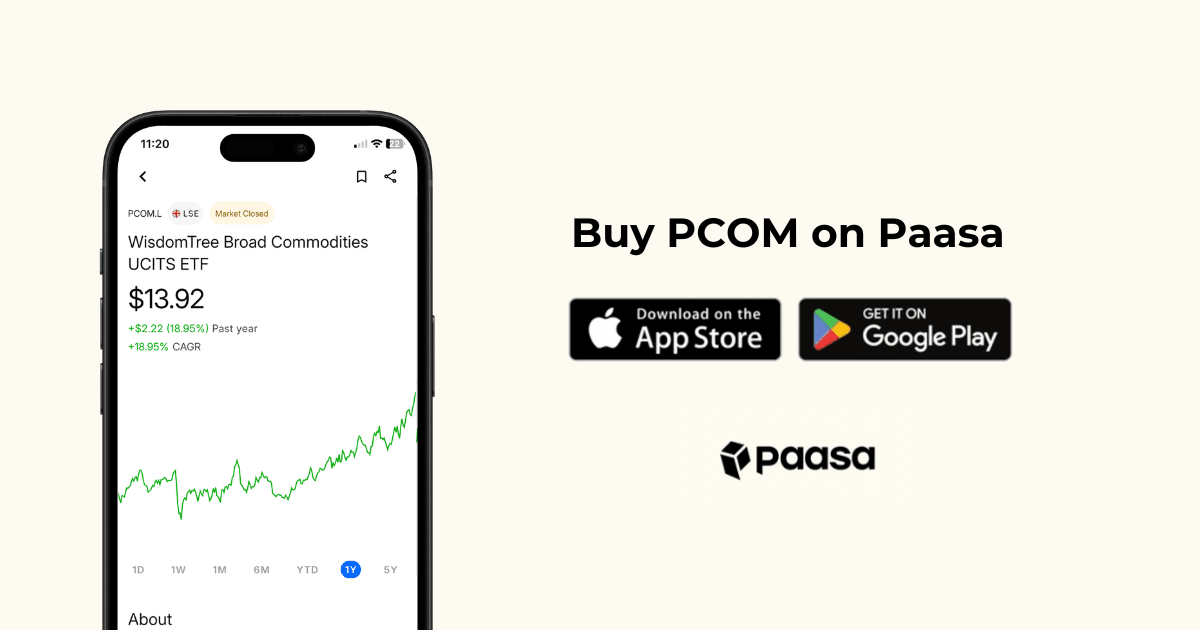
- Fund: WisdomTree Broad Commodities
- Ticker:
PCOM - Exchange: London Stock Exchange (LSE)
- Why: Gives you exposure to Zinc (via the Bloomberg Index) plus Copper, Aluminum, and Energy in a single click.
- Ticker:
3. Mining Stocks (Global)
- Glencore (UK):
- Ticker:
GLEN - Exchange: London Stock Exchange (LSE)
- Profile: The world's biggest commodity trader and a massive zinc producer. Because it is listed in the UK, it is generally tax-efficient for Indian investors.
- You can invest in this stock using Paasa
- Ticker:
- Teck Resources (US/Canada):
- Ticker:
TECK - Exchange: NYSE
- Profile: A major North American producer (Red Dog mine in Alaska), though also heavy in copper.
- Note: While available, this is listed on the NYSE. See the tax warning below.
- You can invest in this stock using Paasa
- Ticker:

Which route is right for you?
| Direct Price ETCs | Diversified Commodity Index | Domestic Equity (HZL) |
Primary Goal | Track zinc price changes directly. | Broad exposure to the "Supercycle". | Dividend income + Growth. |
Dividend Income | None. | Yes (Collateral interest). | Yes (High yield). |
Key Risk | "Roll Costs": Futures renewal. | Dilution: Zinc is a small % of the basket. | Company Risk: Strikes/Regulators. |
Leverage | None (1:1 with price). | Low (Diversified basket). | High: Operational leverage. |
Best For | Short-term price speculation. | Long-term "Buy & Hold" investors. | Dividend seekers. |
Why Indian investors should choose non-US zinc funds
For Indians investing globally, where a fund is located should be an important consideration, as US-domiciled funds and stocks come with a significant taxation risk.
The United States enforces a strict Estate Tax on non-residents. If you hold US-domiciled assets (such as TECK (NYSE) or stocks listed on the NYSE) and pass away, the US government levies a 40% tax on the value of those assets above $60,000.
This means that in the event of an untoward incident, your heirs could lose nearly half of your US-based portfolio to the IRS before the money is even repatriated to India.
This risk makes US funds a poor choice for long-term wealth preservation.
Even for short-term traders, holding these assets carries an unnecessary risk; if an unexpected event occurs while the position is open, the tax implications for your family are severe.
For more information on how the Estate tax can affect your investments, read How the US Estate Tax Works for Indians and NRIs.
The Solution: Non-US Funds
Funds listed on non-US exchanges (European exchanges like the London Stock Exchange, Canadian exchanges like Toronto Stock Exchange, Hong Kong Stock Exchange, etc) do not carry this risk.
They also provide the same exposure to commodities (or stocks) as you can often buy the exact same underlying asset (e.g., the same basket of zinc miners) via a European fund.
By choosing the non-US version of a fund, you get the exact same zinc exposure but completely eliminate the risk of a 40% tax wipeout. For Indian investors, this structural safety makes non-US funds the superior choice.
Invest in Zinc with Paasa
Paasa is a truly global platform designed for the modern Indian investor. We provide direct access to over 10 global exchanges, including the United States, United Kingdom, Switzerland, Hong Kong, Germany, France, Canada, Netherlands, Japan, and Singapore.
This means you are not restricted to just US funds. You can buy the tax-efficient WisdomTree Zinc (ZINC) or Glencore (GLEN) directly from India.
The Compliance Advantage
- Schedule FA Reporting: We generate the exact reports you need for your Indian tax returns.
- Tax Filing & Advice: Seamless support for global capital gains.
- LRS Integration: Guidance on FEMA regulations and limits.
Whether you want to hedge your portfolio with Zinc ETCs or buy global miners, Paasa provides the access and compliance you need.
What other commodities can I invest in with Paasa?
Paasa provides access to all commodities and stocks listed on global stock exchanges across US, Europe and Asia.
Disclaimer
This article is intended for information only and does not constitute investment, tax, or legal advice. The material is based on public sources and our interpretation of current regulations, which may change. Investing in global markets entails risks, including currency risk, political risk, and market volatility. Past performance does not predict future outcomes. Please seek advice from qualified financial, tax, and legal professionals before acting.

