
Investing Strategy
Nvidia Without Its Founder: The Earnings Test Tonight
A week of scandal took Jensen Huang out of the company he built and wiped roughly $1 trillion off Nvidia's value. Tonight's numbers, and Alphabet and Amazon's spending plans, show whether demand is still there.

Arham Jain
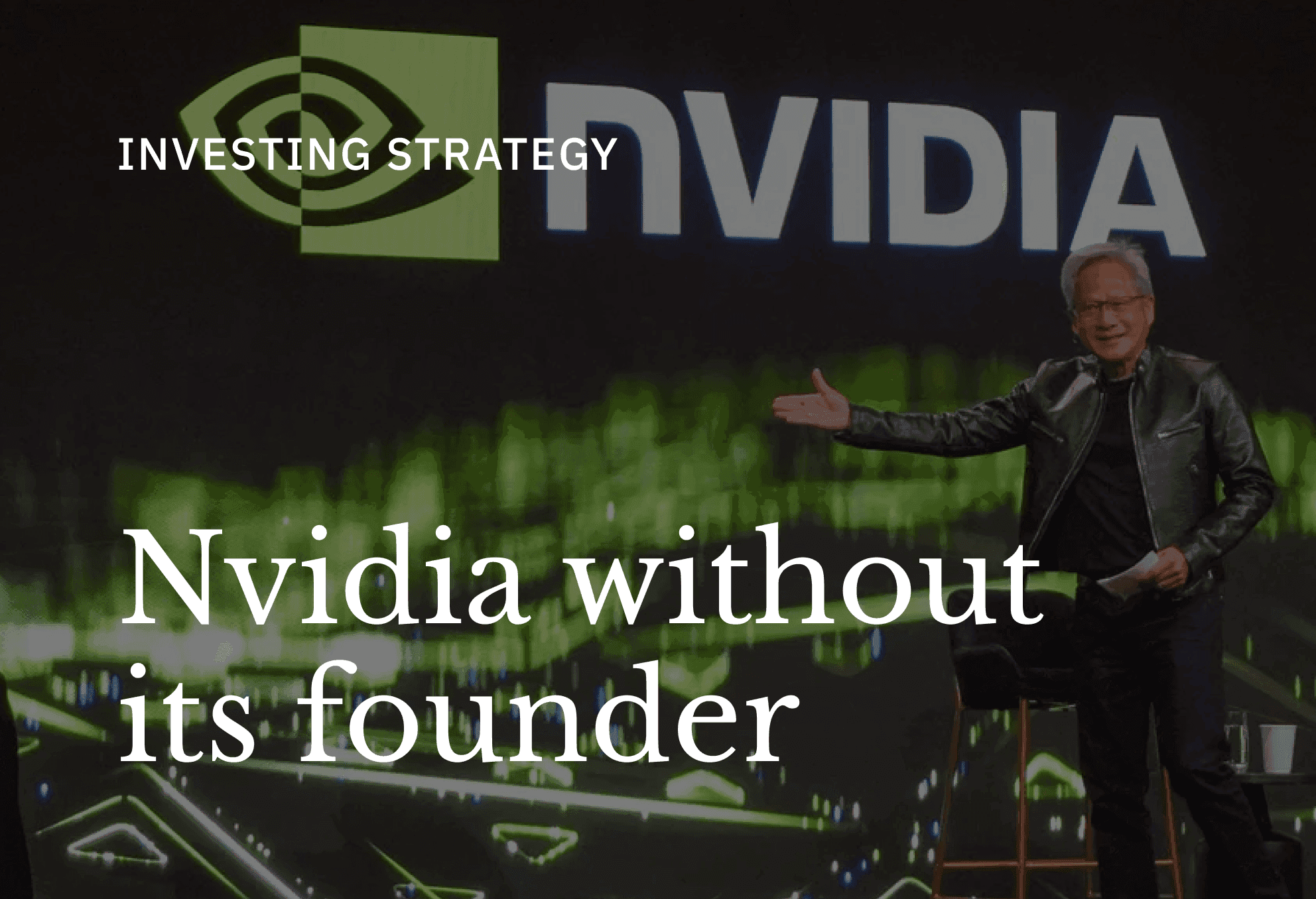
A week of scandal took Jensen Huang out of the company he built and wiped roughly $1 trillion off Nvidia's value. Tonight's numbers will show whether the business is still running on its own momentum, and the spending plans of Alphabet and Amazon suggest the demand is still there.
Nvidia reports its third quarter of fiscal 2027 after the US close today, which lands at about 2:50 am IST on Wednesday, with the call at 3:30 am. It is the first report in 33 years without Jensen Huang as chief executive.
The quarter itself closed on 25 October, before any of this began. So the question for tonight is less about the last three months and more about what the company says next, and who says it.
Table of contents
- How a governance story became a national security story
- What the market expects from the third quarter
- Alphabet and Amazon are still writing bigger cheques
How a governance story became a national security story
The chain of events started with a New York Times report on 29 October describing a close relationship between Huang and Alice Huang, an executive at Megaspeed, a Singapore based AI infrastructure company. The two are not related. US officials believe she has passed information to Beijing, and Megaspeed is under federal investigation over suspected diversion of Nvidia chips to China.
Reports say the company bought about $4.8 billion of Nvidia chips over two years, and that a related family business handled about $7.5 billion of purchases, including banned chips.
What turned a private matter into a board matter was the overlap with export controls. Nvidia's China business is already the most politically sensitive part of its book, and any suggestion that its chief executive was close to someone allegedly feeding Beijing made the board's position very hard to hold.
The board has said it has no reason to believe company secrets or US national security were compromised, and that operations, customer commitments and the product roadmap continue without interruption. Treasury Secretary Scott Bessent has asked for answers within 10 days on whether Nvidia ignored warning signs about diversion to China. The Financial Times has reported that Huang has discussed a possible return; neither Nvidia nor his spokesperson commented.
Daily close, US dollars
Source: 24/7 Wall St (2 November close), StockTitan (6 to 12 November), Gotrade market data (13 November).
At $202.06 on 2 November, Nvidia was valued at $4.88 trillion. By the 13 November close of $162.85 it was worth about $3.92 trillion, a drop of 19.4% in under two weeks. On the morning of the resignation the stock touched $148.80 before recovering to close at $166.19.
Huang himself holds about 812 million shares, or roughly 3.4% of the company, so any decision he makes about that stake is now a live overhang.
What the market expects from the third quarter
Nvidia guided in August to revenue of $108 billion, plus or minus 2%, which is a range of $105.8 billion to $110.2 billion. The guidance assumes no data center compute revenue from China. The Street is a little above the midpoint: Visible Alpha's consensus is $109.3 billion, MarketBeat has $108.85 billion, and Earnings Whispers carries a whisper of $2.60 for adjusted earnings per share against a consensus of $2.47.
US$ billion; Q3 FY2027 shows Visible Alpha consensus
Source: Nvidia results releases for Q3 FY2026, Q4 FY2026, Q1 FY2027 and Q2 FY2027; Visible Alpha via InvestingCube.
The data center line is where the debate sits. Consensus is $101.8 billion, up from $89.0 billion in the second quarter. In August, Kress said the new Vera Rubin platform would be about 20% of third quarter data center revenue and that growth among the largest cloud customers would pick up in the fourth quarter as supply improved. That is a specific claim investors can check tonight.
| Metric | Q3 FY26 actual | Q2 FY27 actual | Q3 FY27 guidance | Q3 FY27 Street |
|---|---|---|---|---|
| Revenue | $57.0bn | $96.2bn | $108.0bn ±2% | $109.3bn |
| Data center revenue | n/a | $89.0bn | Not guided | $101.8bn |
| Adjusted gross margin | n/a | 75.0% | 74.0% ±0.5 pts | n/a |
| Adjusted EPS | $1.30 | $2.22 | Not guided | $2.47 (whisper $2.60) |
| China data center compute | n/a | n/a | Assumed zero | n/a |
US$ per share
Source: MarketBeat (year ago actual and consensus), Nvidia Q2 FY2027 release, Earnings Whispers via Finviz (whisper).
Four things that matter more than the headline
- Fourth quarter guidance. Nvidia has beaten earnings estimates in each of the last four quarters, so a beat is priced. The guide is what moves the stock.
- Margins. Management has flagged a fourth quarter gross margin floor of 71% to 72% as Rubin ramps and memory costs rise, then 72% to 73% in fiscal 2028.
- Who speaks, and how. Kress has run the numbers on these calls for over a decade. The market will listen for tone on the CEO search, the export compliance review and whether any customer has paused orders.
- Customer financing. Several large buyers are now funding capex with debt and equity. Any sign that orders depend on that financing staying open is a risk to the multiple.
The quarter was earned under Huang. The guidance will be the first number Nvidia owns without him.
Alphabet and Amazon are still writing bigger cheques
Nvidia's revenue is somebody else's capex, so the most useful read on its next year sits in the October results of its largest customers. Both Alphabet and Amazon missed on earnings, both saw their shares fall, and both told investors they will spend more in 2027, not less.
Alphabet: cloud doubled, cash flow turned negative
Alphabet reported third quarter revenue of $127.6 billion, up 25%, but adjusted EPS of $2.67 missed the $3.02 consensus, partly due to an $8.2 billion unrealised loss on its SpaceX stake. Google Cloud revenue rose 103% to $30.7 billion, and its backlog stands at $561 billion.
Capex was $51.4 billion in the quarter against $42.3 billion of operating cash flow, leaving free cash flow at minus $9.1 billion. Management held 2026 capex guidance at $195 billion to $205 billion and said spending would rise significantly in 2027; CNBC reported expectations that it will exceed $300 billion. The stock fell 12.6% the next day.
Amazon: AWS at its fastest in nearly five years
Amazon's revenue rose 12% to $201.9 billion and EPS of $1.89 missed the $1.96 forecast. AWS grew 39% to $46.0 billion, its fastest pace since late 2021, with operating income of $17.8 billion and a $578 billion backlog.
Cash capex was $75.9 billion in the quarter. Amazon still expects about $220 billion of cash capex in 2026, mostly for AWS, said it would spend meaningfully more in 2027, and told investors AWS can grow above 40% in 2027 and 2028. Trailing twelve month free cash flow is now about minus $42.4 billion.
US$ billion; Alphabet for Q3 2026, Amazon on a trailing twelve month basis
Source: Alphabet Q3 2026 results via Global Data Center Hub; Amazon Q3 2026 results via Averin. Periods differ by company and are labelled.
Latest reported quarter, %
Source: Nvidia Q2 FY2027 results via Gotrade; Alphabet and Amazon Q3 2026 results via CNBC, Insider Finance and Datastudios.
| Guidance item | Alphabet | Amazon |
|---|---|---|
| 2026 capex | $195bn to $205bn, unchanged | About $220bn cash capex, unchanged |
| 2027 capex | To rise significantly | Meaningfully more than 2026 |
| Q3 capex | $51.4bn | $75.9bn cash capex |
| Cloud growth | +103% to $30.7bn | +39% to $46.0bn |
| Cloud backlog | $561bn | $578bn |
| Free cash flow | Minus $9.1bn in Q3 | Minus $42.4bn, trailing 12 months |
| Other signals | More external TPU system revenue in 2027 | AWS growth above 40% in 2027 and 2028; Q4 sales $240bn to $247bn |
Two points cut against each other here. The demand signal is strong: backlogs of more than half a trillion dollars at each company, cloud growth accelerating, and capex rising again next year. But a growing share of that spend goes to in-house silicon, Google's TPUs and Amazon's Trainium, and both companies now spend more than they generate.
Alphabet raised equity in June to help fund the build, including a $10 billion private placement with Berkshire Hathaway. Spending that has outgrown internal cash flow is spending that can be cut faster if conditions change.
Limitations
This piece was written before Nvidia's results were released. Consensus figures differ by provider and are shown as reported. Allegations about Alice Huang, Megaspeed and the further relationships come from media reports and official statements and have not been proven. Alphabet and Amazon figures cover different periods where labelled. Tax treatment depends on individual circumstances and may change.


Invest in global markets from India

Discussion
Disclaimer
The information provided in this post is for general informational purposes only. It is not intended as professional advice or to replace consultation with qualified professionals. While we strive to ensure the accuracy and reliability of the information presented, we make no representations or warranties of any kind, express or implied, about the completeness, accuracy, reliability, suitability, or availability with respect to the content contained herein. Any reliance you place on such information is therefore strictly at your own risk. We disclaim any liability for any loss or damage, including, without limitation, indirect or consequential loss or damage, or any loss or damage whatsoever arising from loss of data or profits arising out of, or in connection with, the use of this post. Always seek the advice of professionals or relevant authorities regarding your specific situation or circumstances.