

1.1
Introduction
If you work for a multinational or a foreign-listed company like Nvidia, Microsoft and Google, part of your pay may not come as cash at all, but as shares in the company you work for. These are almost always RSUs, and if you hold them, you are already a global investor, whether or not you ever decided to become one.
1.2
Journey Overview
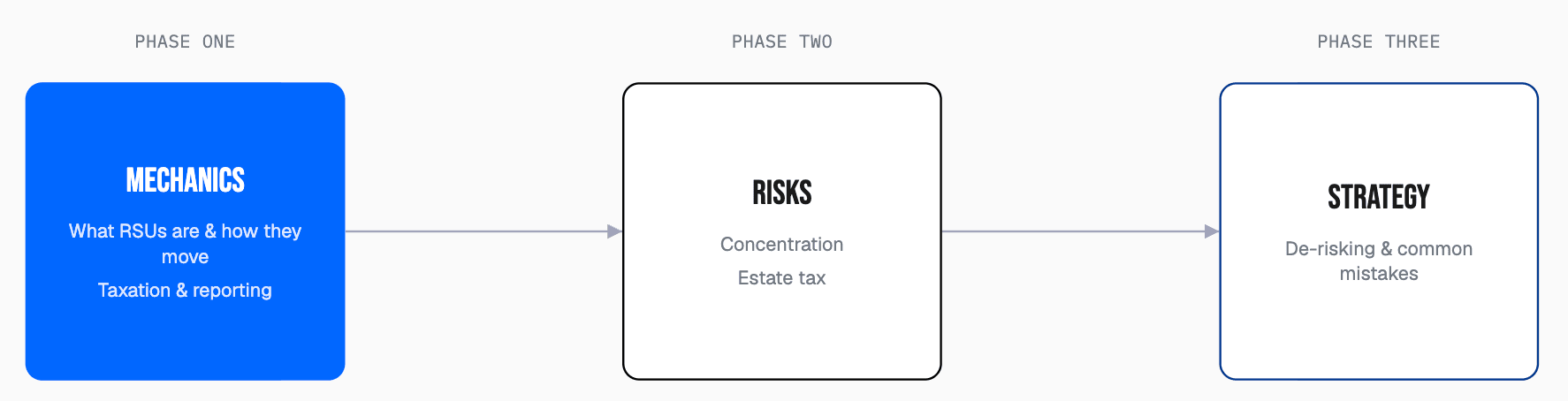
- Phase-1 takes you through the mechanics. First, what an RSU actually is and how it moves through its life, from the day it is granted, to the day it vests and becomes real shares, to the day you eventually sell. We will understand the entire lifecycle and important milestones in the RSU lifecycle.
We will then move on to the tax and reporting side of that same journey: what you owe when your shares vest, what you owe when you sell them, and the disclosure obligations that begin the moment you hold a foreign asset.
- Phase-2 deals with the two problems specific to an RSU holder. The first is concentration that comes from the fact that your salary and your savings can end up riding on the same company at once, a risk unlike anything an ordinary investor carries.
The second is a risk most people have never heard of until it is too late: the US estate tax that threatens to wipe out up to 40% of your direct US holding. Neither problem is obvious from the very beginning but become critical once your RSUs have vested for a few years.
- Phase-3 is about how to remove those two risks. Practical, repeatable de-risking strategies, focusing on how to defend against the two problems without compromising on your returns. We will also explore here a few common but grave mistakes that RSU holders often end up making and the strategies to prevent you from repeating them.





Discussion