
There are several distinct ways an Indian can actually invest abroad, and they differ far more than they first appear. This module walks through each route, US ETFs, UCITS ETFs, GIFT City funds, and international mutual funds and then compares them across the dimensions that matter, so you can find the one that genuinely fits who you are.
You already know what an ETF is from Module 0 - Chapter 7. This chapter is about what it means to reach one through the US route specifically: how it works, who runs these funds, and what you gain and give up by going this way.
A US ETF is simply an ETF listed and traded on a US stock exchange, the NYSE or the Nasdaq, and priced in US dollars. A US-listed ETF can hold American companies, but it can just as easily hold European companies, emerging markets, or the whole world. The listing is American; the contents can be global.
What makes this route distinctive is its breadth and maturity. The US ETF market is the largest and most developed in the world. Almost any exposure you can think of, the 500 largest US companies, the entire US market, developed markets worldwide like China, a single sector like defence, a specific theme like AI infrastructure, exists as a US-listed ETF, usually in several competing products..
Reaching it works the way you saw in Module 1. You open an account with a broker offering US market access, complete KYC once, and remit money abroad under the LRS, converting rupees to dollars. This is an offshore route: your money leaves India, which means the remittance, the currency conversion, and the reporting from Module 1 - Chapter 4 all apply.
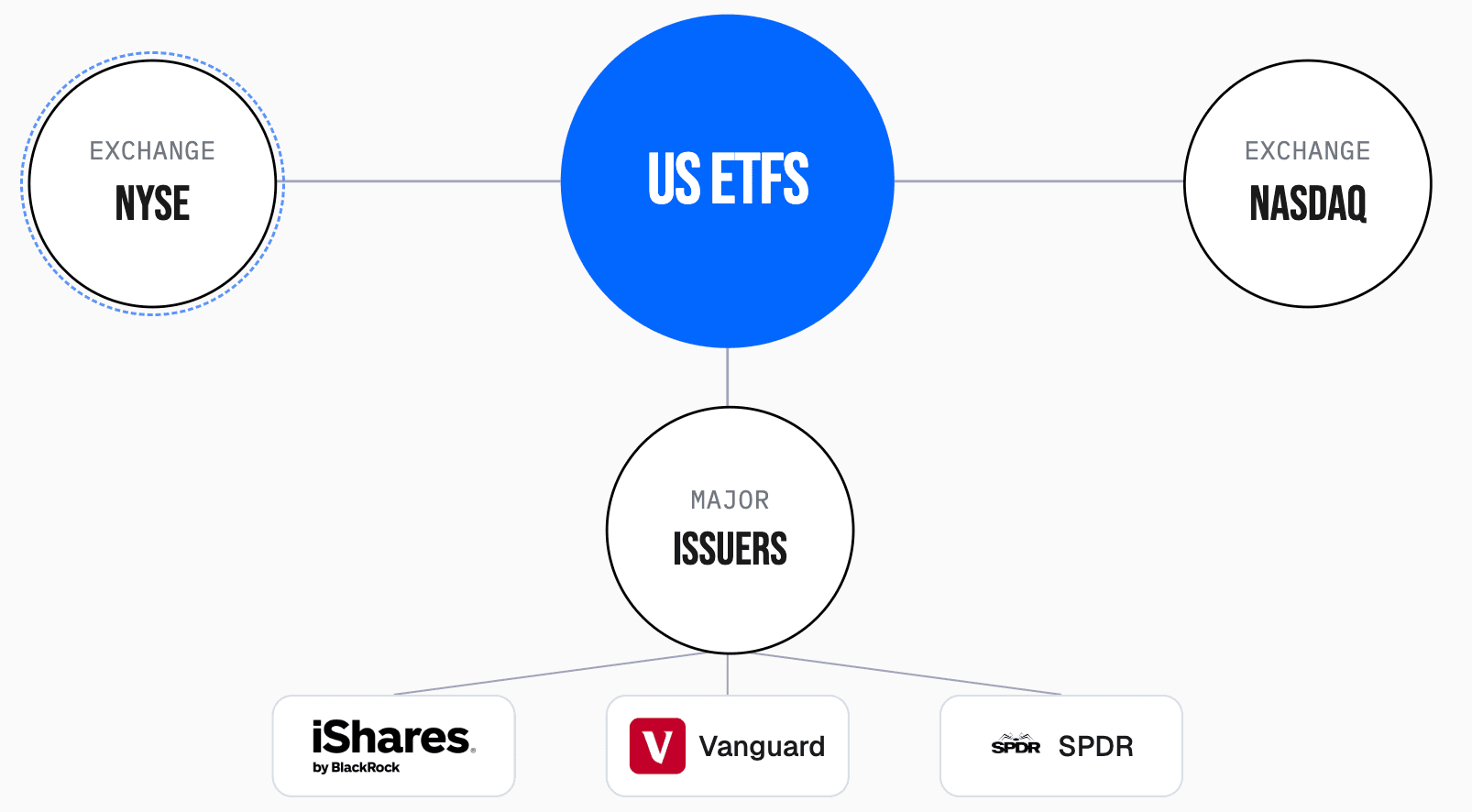
A handful of large, well-established issuers dominate the US market, and knowing the names helps you recognise what you are buying.
The three biggest are:
These three run a very large share of the world's ETF assets. For a beginner, the most popular, broadest US ETFs come from a small set of reputable issuers. You are choosing between giants.
The thing to compare across them is usually cost and precisely what the fund tracks, since several issuers often offer near-identical ETFs following the same index. That comparison is where the expense ratio you met in Module 1 does its quiet work over the years.
But, the tax treatment of US ETFs is significant enough because these products are located in the US, that an entire alternative route exists largely to sidestep it and protect your returns. That route is the UCITS ETF, covered in the next chapter.
One question. Less than 10 seconds.
Reinforce what you've learned before continuing to the next chapter.






Discussion