This module builds the foundation: why an Indian investor might look beyond home, and the core concepts, asset classes, products, and everything else that turn global investing from a wall of jargon into something you can read with confidence.
Suppose a friend wants to open a cafe. It will cost ten lakh rupees, but she has only six. She needs four lakh more, and rather than take a loan, she offers you and three others a deal: put in one lakh each, and own a slice of the cafe in return. You hand over your one lakh. What do you now own?
You own a piece of the business itself. Not a loan to be repaid, but a genuine share, ten percent of it, since your one lakh is one-tenth of the total. If the cafe thrives, your slice grows more valuable. If it struggles, it is worth less. You are no longer a lender or a customer. You are an owner.
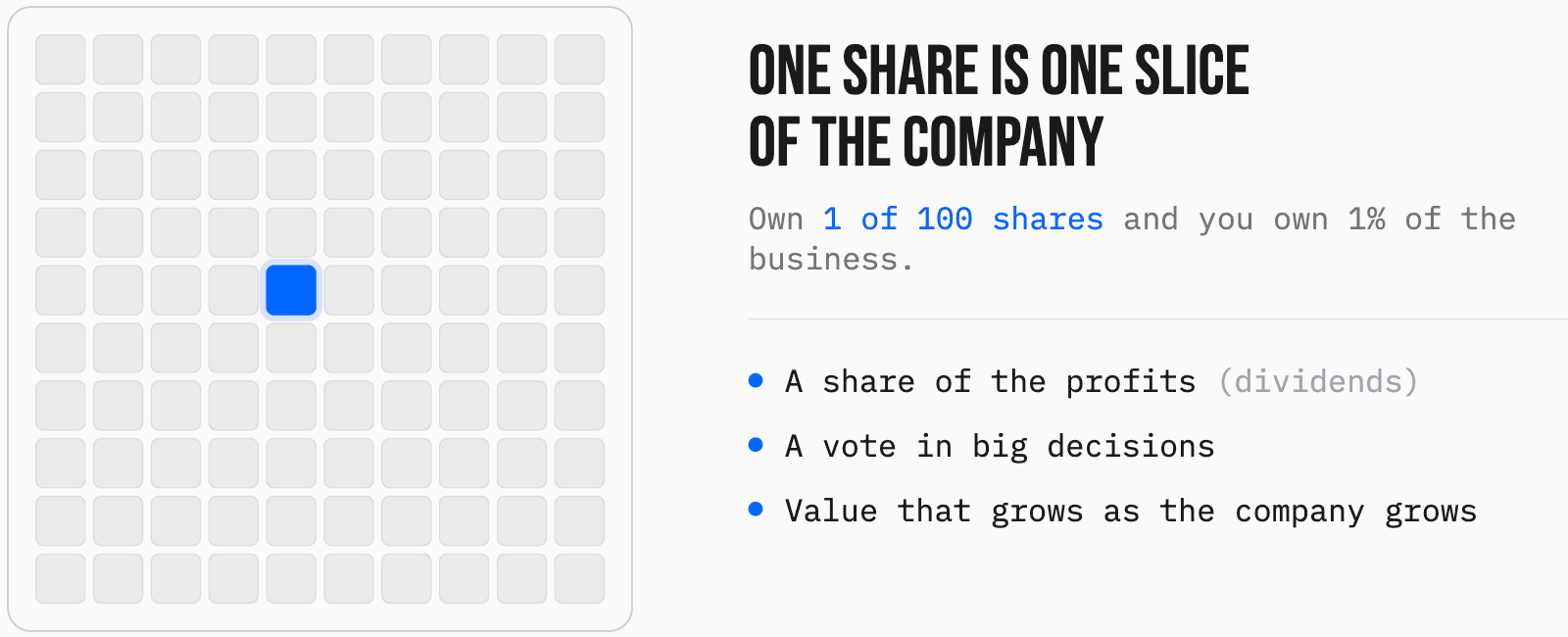
That is what a stock is. A stock, also called a share, is a unit of ownership in a company. When you buy one share of Apple, you have done exactly what you did with the cafe, only on a vast scale and through a stock exchange rather than a handshake. You own a tiny fraction of the whole enterprise, its products, its brand, its future profits. Tiny, because Apple is divided into billions of shares, but real.
Owning a slice of a business is all very well, but as an investor you will want to know the practical thing: how does a stock actually put money in your pocket? There are two ways, and it is worth understanding both.
The first is capital appreciation. As a business grows more valuable over time, the value of each share tends to rise with it. Buy a share at $100, and if the company prospers and that share is later worth $150, the $50 gain is yours when you sell. For most long-term investors, this is the larger prize.
The second is the dividend. When a company earns a profit, it faces a choice. It can put that profit back into the business for further growth, or it can hand a portion of it back to its owners as cash. That cash payout is a dividend. As a shareholder, you are entitled to your share of it: own one-millionth of the company, and you receive one-millionth of whatever is distributed.
Why does this matter? Because a dividend is money you earn simply for holding the share, without selling anything. It is income that arrives whether the share price is up or down that year, which makes it a steadier, more predictable companion to the ups and downs of price. A great deal of equity's long-run wealth-building comes from exactly this combination: the share rising in value and paying you along the way.
Here is a practical problem that global investing throws up early. A single share of some US companies can cost several hundred dollars. Converted to rupees, one share alone might run into tens of thousands. For someone wanting to start small, or to spread a modest sum across several companies, that is a real barrier. Whole shares are simply too large a unit.
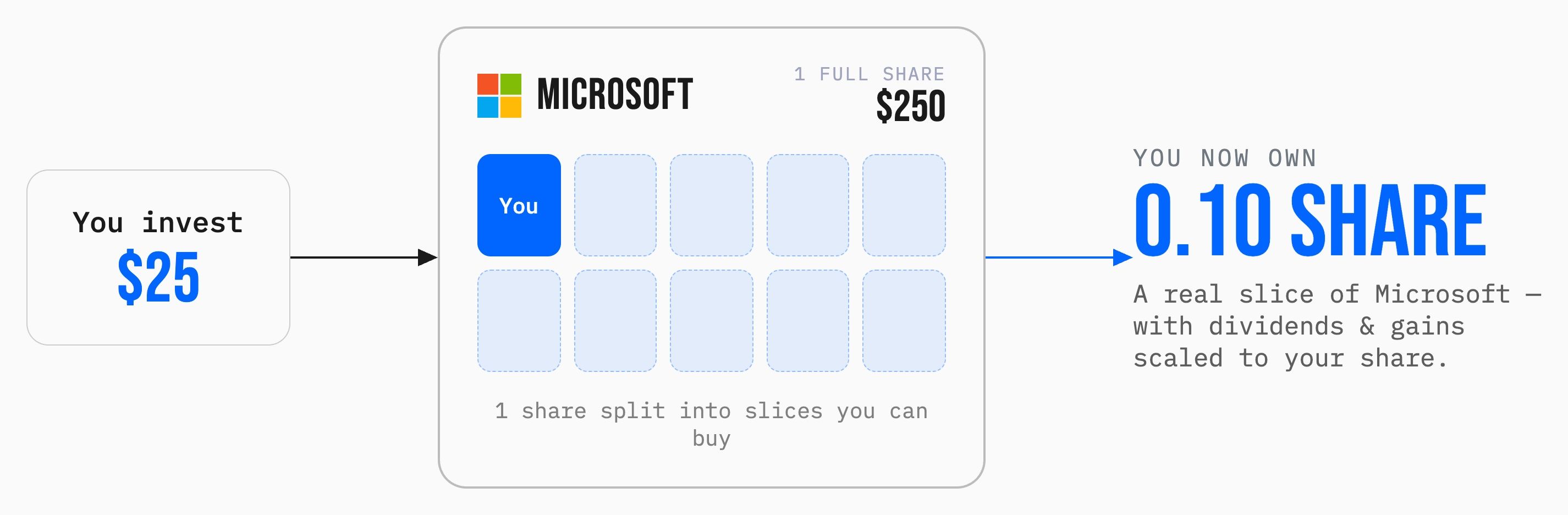
Fractional shares solve this neatly. They let you buy a portion of a single share rather than a whole one. If a share costs $200 and you wish to invest only $50, you can buy a quarter of it. You receive a quarter of the dividends and a quarter of any price movement, in exact proportion to what you own.
Two things make this especially useful. It puts expensive global companies within reach of a beginner with a small amount to invest. And it lets you decide an investment by rupee amount rather than by share count, so you can say "put Rs 5,000 into this company" instead of being forced to buy an expensive share. Fractional investing is one of the quiet features that has made global investing accessible to ordinary investors, and we will see it again when we compare routes later.
One question. Less than 10 seconds.
Reinforce what you've learned before continuing to the next chapter.






Discussion