


Invest in the Chinese market from India
Access the world's second-largest economy through the Tokyo–Hong Kong–New York bridge.
 ISO Certified
 SIPC Insured
 SEBI RIA
Why Invest in China
The Green Energy Superpower
China controls over 80% of the global solar supply chain and leads the world in battery innovation and EV exports.
Learn more



Advanced Manufacturing & Hardware AI
Invest in high-precision industrial robotics to the ecosystems powering the next generation of smart devices.
Global Logistics Efficiency
Own the platforms — like PDD Holdings and Alibaba — that are bypassing traditional retail by connecting factory floors directly to global consumers.
Ways to Invest with Paasa
1. Hong Kong-listed H-Shares
Directly own shares of mainland companies listed in Hong Kong (HKD).
2. Stock Connect (Mainland A-Shares)
Access selected Shanghai and Shenzhen-listed companies through Hong Kong.
3. US-listed ADRs
Trade Chinese tech giants like JD.com and Baidu on the NYSE and NASDAQ during US market hours.
4. Tax-Optimized UCITS ETFs
Access broad China indices or specific themes (like the CSI 300) through European-domiciled ETFs.
Onboarding
How to invest in Chinese stocks & ETFs with Paasa
STEP 1
Open your account and complete KYC

STEP 2
Remit funds under LRS via your bank


STEP 3
Invest in H-shares, ADRs, and global ETFs
Why Invest with Paasa
Paasa combines regulated infrastructure, competitive FX, and expert support so you can navigate the Chinese market with confidence.

Compliance-First Infrastructure
Full support for RBI LRS flows and FEMA compliance. We handle the paperwork so you stay on the right side of every regulation.

Estate Tax Protection
We enable Hong Kong and UCITS routes to eliminate US estate tax exposure — which can be as high as 40% on US-held assets.

Delisting Hedge
With direct HKEX access, your portfolio is protected from geopolitical delisting risks in the US market.

Automated Tax Reporting
Download ready-to-use Tax and Schedule FA reports specifically designed for the Indian ITR.

SEBI-Registered Advisory
Expert guidance on sector-specific trends and policy alignment in the Chinese market and beyond.

Dedicated relationship manager
Get a dedicated expert to assist you with everything from LRS remittances to portfolio reviews.
Will my investments be taxed both in India and China?
No. Under the India–China Double Taxation Avoidance Agreement (DTAA), you can claim credit in India for taxes paid in China, ensuring you aren't taxed twice.

How are capital gains taxed in India?
For Indian residents, capital gains are taxed based on your holding period. China generally does not levy capital gains tax on non-resident individual investors for HKEX-listed stocks.
| Holding Period | Classification | Tax Rate |
|---|---|---|
| ≤ 24 Months | Short-Term (STCG) | Slab Rate (Added to your income) |
| > 24 Months | Long-Term (LTCG) | 12.5% (Flat rate without indexation) |

How is dividend income taxed in India?
Dividends are taxed at your applicable slab rate in India. For companies incorporated in the PRC, a 10% withholding tax is typically deducted at the source. Under the India–China DTAA, you can claim this 10% as a Foreign Tax Credit (FTC) in your ITR to avoid double taxation.
Paasa helps you manage the documentation required to claim your FTC and stay fully compliant with Schedule FA reporting requirements.

Popular on Paasa
Popular Chinese companies Indian investors are buying
Green Energy & EV Supply Chain
Leading the global transition to electric mobility with a vertically integrated battery-to-car supply chain.

The world's top lithium producer, supplying the raw materials critical to global EV battery manufacturing.

The world's largest manufacturer of solar glass, deeply integrated into the global renewable energy infrastructure.

A global EV and auto powerhouse, owning brands like Volvo, Polestar, and Zeekr.
The New "Tier-1" Tech

A massive AIoT ecosystem disruptor now expanding into high-end smart vehicles.

China's leader in generative AI and the operator of the world's largest autonomous taxi fleet.

The foundational player in China's domestic semiconductor manufacturing roadmap.

China's ultimate tech ecosystem, dominating gaming, digital payments, and enterprise cloud infrastructure.
Global Logistics & E-commerce




Companies listed are for informational purposes and are not investment advice.
Learn
Resources

How Global Stocks and ETFs Are Taxed in India
Capital gains, dividends, TCS, DTAA, and Schedule FA — everything Indian investors need to know about taxation on foreign assets.

Capital Gains Tax on Foreign Stocks and ETFs
Holding periods, STCG vs LTCG, currency conversion rules, loss offsetting, and what's not covered by DTAAs.

How Foreign Dividend Income Is Taxed for Indian Investors
Source country withholding, slab rates, surcharge caps, FTC claims, and why accumulating UCITS ETFs can optimize long-term returns.
Complete LRS Guide for Indians
The $250k annual limit, purpose codes, TCS thresholds, and common mistakes when sending money abroad under RBI's LRS.

TCS on Foreign Investments
Rates, exemption limits, how TCS is calculated, and how to claim it back as a refund or adjustment in your ITR.
Testimonials

“Very useful platform for me in order to access US stock markets from India, and Nitish and his team make the onboarding process pretty seamless. Their offering of customised stock baskets for the US market is pretty unique - I'm a happy user and wish they grow from strength to strength!”
Anomitra Saha
Principal Engineer, Captainfresh (Bangalore)

“Craft matters. Paasa's experience is clean, but the real win is the rigor behind it; I needed clarity. Paasa delivered - FEMA guidance I could act on, onboarding that just worked, and portfolios that felt built for diversification of RSUs, not retrofitted. Disclosure: I'm an angel investor in Paasa.”
Deepak Menon
Vice President, Microsoft (Hyderabad)

“Great interface and easy to use. Gives access to global portfolios better than any app. You can curate your own portfolios or choose from the vast number of portfolios they've made.”
Maadhav Veer Singh
CIO, BTB Family Office (Gurgaon)

“The seamless fund withdrawals and dedicated advisory support make global investing accessible, affordable and trustworthy.”
Navdeep Manaktala
Co-Founder, Snowbit (Gurgaon)
Our customers work at











Download Paasa.
Start investing.
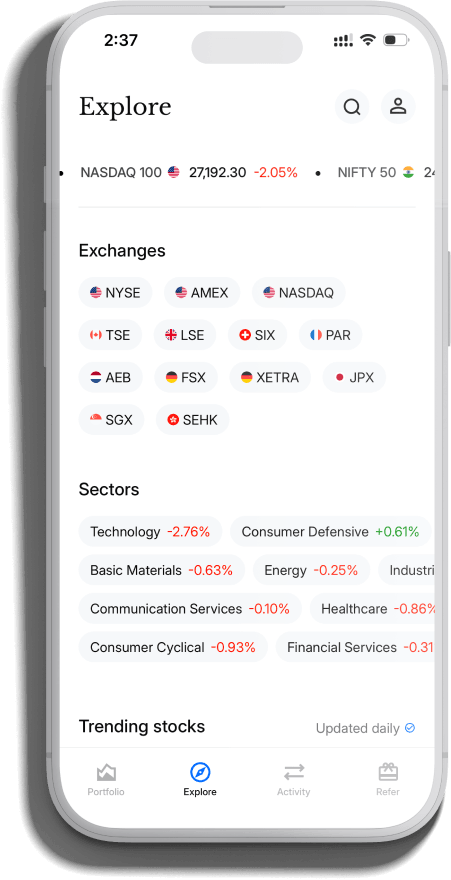
15,000+ stocks and ETFs, across US and global markets.


You own your assets
Your holdings are held in your name at our global custodian, Interactive Brokers.
SEBI REGISTERED RIA: INA000021058


Enterprise-grade security, certified for sensitive and regulated data
FAQs
Can Indian residents legally invest in the Chinese market?›
Yes. While you cannot open a domestic brokerage account in mainland China, you can access Chinese equities via international routes like US-listed ADRs, Hong Kong-listed H-shares, and global ETFs. All such investments must be routed under the RBI's Liberalized Remittance Scheme (LRS), which has a cap of $250,000 per financial year.
What is the difference between ADRs and H-shares?›
ADRs (American Depositary Receipts) are receipts issued by US banks that trade on NYSE/NASDAQ and track Chinese stocks. H-shares are actual shares of mainland Chinese companies listed directly on the Hong Kong Stock Exchange. For larger portfolios, H-shares are often preferred as they eliminate US estate tax exposure and US-China delisting risks.
Can I buy mainland China A-shares (Shanghai/Shenzhen) through Paasa?›
Yes, through the Stock Connect gateway. This cross-border link allows you to trade a curated list of mainland-listed A-shares using your Hong Kong trading infrastructure.
How are Chinese dividends taxed for Indians?›
Dividends are taxed at your applicable income tax slab rate in India. For companies incorporated in the PRC, a 10% withholding tax is typically deducted at the source. Under the India–China DTAA, you can claim this 10% as a Foreign Tax Credit (FTC) to avoid double taxation.
Are my Chinese investments safe?›
Your assets are held in your name at our global custodian partner, Interactive Brokers (IBKR). This ensures that your holdings are protected by international regulatory frameworks and are segregated from Paasa's own corporate assets.
Does Paasa provide tax reports for foreign asset disclosure?›
Yes. If you hold foreign securities on March 31, you must disclose them in Schedule FA of your ITR. Paasa provides ready-to-use reports and capital gains statements specifically designed to help Indian residents fulfill these compliance requirements.
What is the minimum investment for the China market?›
Paasa has a general account minimum of $100. However, please note that many stocks on the Hong Kong Stock Exchange trade in "lots" (e.g., 100 shares), which may require a higher initial capital outlay for specific individual stocks compared to fractional US shares.
Can I invest in Chinese companies through Indian Mutual Funds?›
Yes, there are India-domiciled "Feeder Funds" that invest in China. While these don't require LRS paperwork, they are subject to SEBI's industry-wide overseas investment caps, which can lead to subscriptions being paused periodically.
Build your China portfolio
Book a call with our team to get started.