
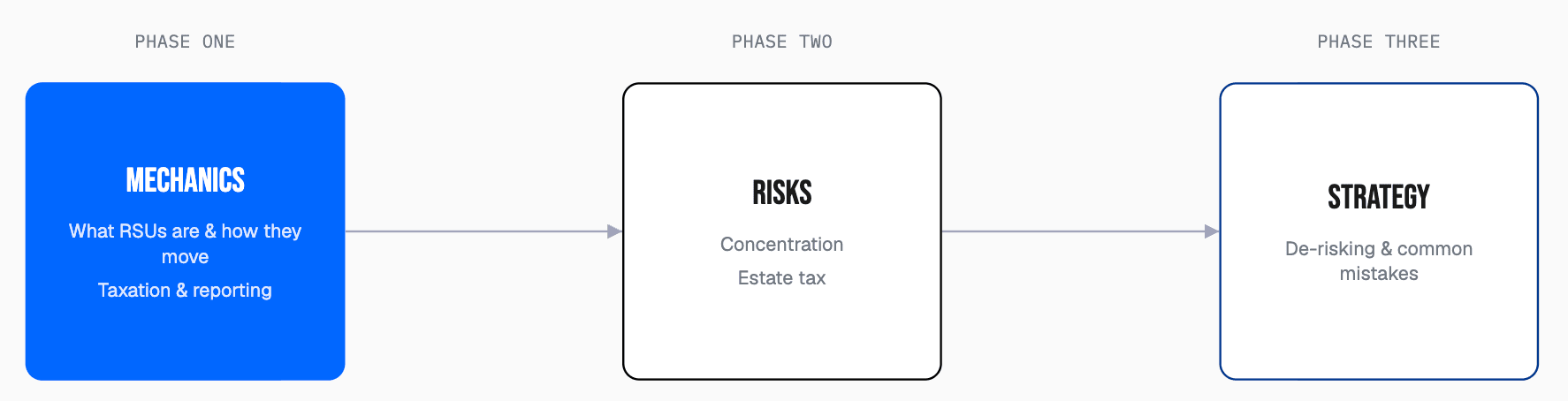
If part of your pay comes as company shares, you're already a global investor, whether you meant to be one or not. This module is built specifically for RSU holders. It walks through the full lifecycle of an RSU from grant to sale, how it is taxed, and the problems unique to them.
If you work for a multinational or a foreign-listed company like Nvidia, Microsoft and Google, part of your pay may not come as cash at all, but as shares in the company you work for. These are almost always RSUs, and if you hold them, you are already a global investor, whether or not you ever decided to become one.
One question. Less than 10 seconds.
Reinforce what you've learned before continuing to the next chapter.






Discussion