When you invest abroad, a second country often taxes you too, before India ever gets involved. This module explains that foreign layer, dividend withholding, the treaty and foreign tax credit that stop you being taxed twice, and US estate tax, and ends by comparing the routes on their full, two-sided tax picture.
US estate tax has nothing to do with income and everything to do with what happens to your holdings when you die. This chapter covers the low $60,000 exemption, the 40% rate above it, and why the India-US income tax treaty offers no protection here.
Estate tax is a tax on the transfer of your assets to your heirs when you die. It is a tax on the value of certain assets you hold, levied before those assets pass to the people you leave them to.
The United States levies such a tax and it applies not only to Americans but to foreigners who hold US assets. If you, an Indian resident who is not a US citizen or resident, die owning certain US-based assets, those assets can be subject to US estate tax before your heirs can inherit them.
A US citizen or resident enjoys an enormous estate tax exemption, in the millions of dollars, so estate tax affects very few of them. A non-resident who is not a US citizen gets almost none of that. The exemption for a non-resident on their US-situated assets is just $60,000.
Above that 60,000 dollar threshold, the US can tax the value of your US-situs assets at progressive rates that climb up to 40%. An Indian investor who has built up, say, a few hundred thousand dollars of US stocks has, on paper, a large exposure sitting quietly over that holding, payable by their family in the event of their death.
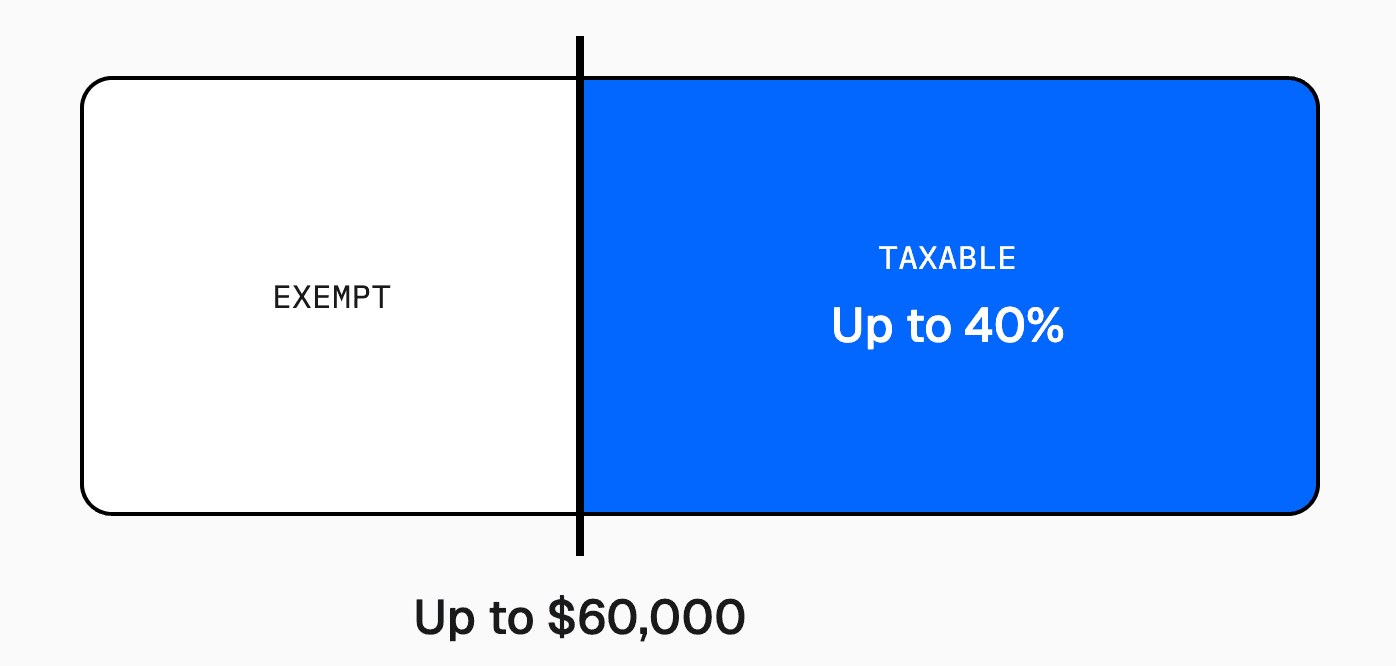
The US does have estate tax treaties with a small number of countries that soften this exposure, but India is not among them. So for an Indian investor, there is no treaty relief on US estate tax at all. The full 60,000 dollar threshold and the rate above it apply with nothing to reduce them.
US estate tax applies only to US-situs assets, so the entire question is which of your holdings count as US-situated and which do not.
Shares in a US company, an Apple or a Microsoft, are US-situs assets, and cash sitting in a US brokerage account is generally treated as US-situs too. But, and this is the pivotal point, a fund domiciled outside the US that holds US companies is generally not a US-situs asset, even though its underlying holdings are American. The situs follows the fund's domicile, not what the fund owns underneath.
This is the mechanical reason the UCITS route exists. An Irish-domiciled UCITS ETF that tracks the S&P 500 gives you exposure to the same American companies as a US-listed ETF, but because the fund itself is Irish rather than US-situated, it generally sits outside US estate tax.
For someone with a small US holding, well under the 60,000 dollar threshold, this is not an immediate concern, though it becomes one as the holding grows. For someone building a substantial portfolio of directly held US assets, running into hundreds of thousands of dollars, this is a serious and real exposure that deserves deliberate planning.
US estate tax is the quiet giant of foreign-side taxation. This is the deepest reason the route you choose matters. The final chapter compares the routes on their total tax treatment and shows, at last, why one route can be meaningfully more efficient than another.
One question. Less than 10 seconds.
Reinforce what you've learned before continuing to the next chapter.







Discussion