When you invest abroad, a second country often taxes you too, before India ever gets involved. This module explains that foreign layer, dividend withholding, the treaty and foreign tax credit that stop you being taxed twice, and US estate tax, and ends by comparing the routes on their full, two-sided tax picture.
The Double Taxation Avoidance Agreement, the DTAA, is a treaty between India and another country, in our case the United States. It does two things.
That relief mechanism is called the foreign tax credit.
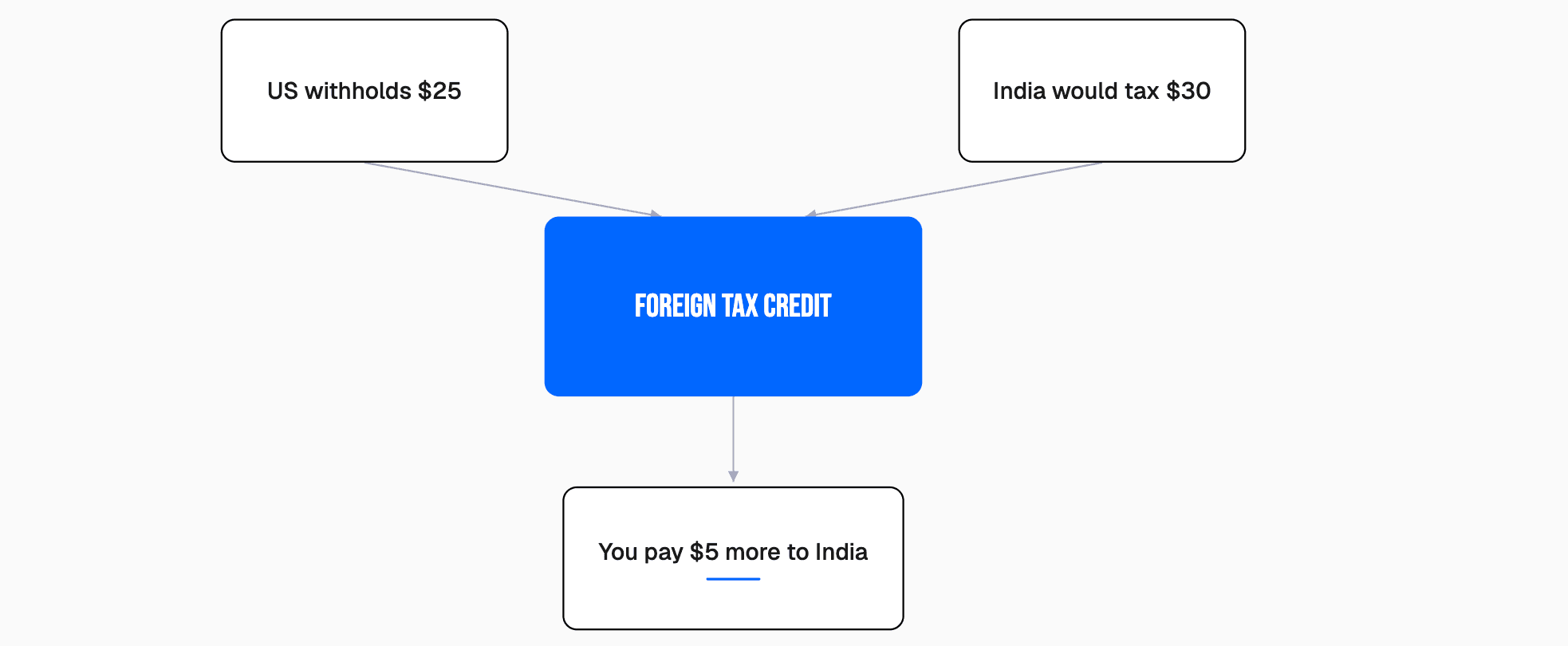
The foreign tax credit, or FTC, is the heart of the whole system. Your foreign tax credit is limited to the lower of the two: the tax actually paid abroad, and the Indian tax payable on that same income. It cannot exceed either. What this means in practice depends on how your Indian tax rate compares to the foreign rate.
If your Indian tax on the dividend is higher than the foreign tax withheld, the credit wipes out the foreign portion and you pay the remaining difference to India. If your Indian tax on the dividend is lower than the foreign tax withheld, the credit covers your entire Indian liability, and you owe nothing more to India, but you also do not get the excess foreign tax back. That excess simply becomes a cost, because there is no refund of foreign tax and no carry-forward of unused credit. So the practical effect is that you end up paying, in total, roughly the higher of the two rates, once.
You have to claim it when you file, and there is a specific piece of paperwork that unlocks it.
The key document is Form 67. This is the form through which you claim the foreign tax credit in your Indian return, declaring the foreign income and the foreign tax paid on it. Form 67 generally must be filed before or along with your income tax return to claim the credit.
Alongside Form 67, the foreign income and the relief show up in the schedules you met in the reporting chapters. The foreign dividend is reported as income in Schedule FSI. The tax relief you are claiming is reflected in Schedule TR. And the underlying asset remains disclosed in Schedule FA.
To support the foreign tax credit, you rely on documents that prove how much foreign tax was actually paid. On the US side, your broker issues an annual statement, commonly the 1042-S, showing the dividends paid and the tax withheld, along with your regular brokerage statements. These are the evidence behind the number you put on Form 67.
With dividends and their double-tax reconciliation now fully covered, one foreign-side tax remains: US estate tax. That is the next chapter.
One question. Less than 10 seconds.
Reinforce what you've learned before continuing to the next chapter.






Discussion