
If you're moving back to India after years abroad and qualify for the RNOR status, this module is for you and everything that becomes important due to this move. Your foreign brokerage account, your retirement savings, your RSUs, the property you may own abroad; each piece has its own rules and its own timeline that becomes critical for the future of these entities.
We learnt earlier that income received in a foreign account first is what keeps it exempt during RNOR. The RFC account is different: it's a domestic account, held in India, that lets you hold foreign currency without immediately converting it to rupees.
Think of it as the place foreign-sourced money can land once it's already made its way into the Indian banking system, without being forced into INR the moment it arrives.
Money sitting in your RFC account isn't uniformly free to use. What it can fund depends entirely on what kind of transaction you're making.
Current account transactions, foreign travel, funding education abroad, medical treatment, gifts or maintenance sent to close relatives who are NRIs, day-to-day living expenses for someone abroad, can be funded from your RFC account without hitting the LRS ceiling at all.
Capital account transactions are a different matter entirely. Buying foreign stocks, ETFs, or property, or opening a new foreign bank account, still falls under the LRS limit of USD 250,000 per year, even when the money funding it is already sitting in your RFC account.
RFC does not bypass LRS for fresh investment. The source of the money doesn't exempt the transaction from the cap; the type of transaction does.
If you're planning to keep building a foreign portfolio while you're RNOR, or drawing down a retirement account and reinvesting the proceeds, it's worth internalizing this now rather than discovering it later.
Having a large RFC balance doesn't give you extra room beyond the standard LRS limit for new investments. It gives you flexibility on currency and timing, not a bigger cap.
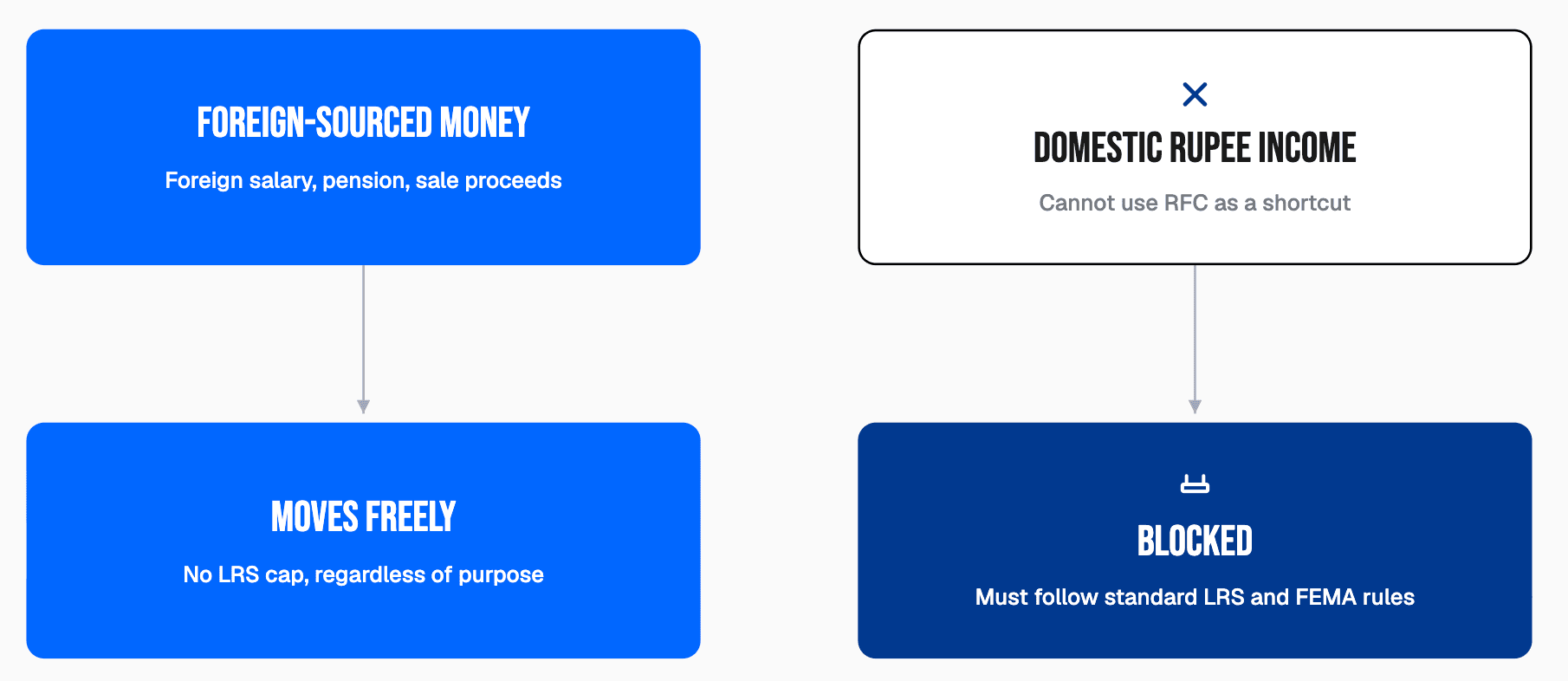
The RFC account is genuinely useful for funding ordinary living and family expenses without an LRS cap but it does not create extra room for fresh capital investments abroad, that still runs through the standard LRS limit regardless of which account the money starts in.
With your accounts and this new option now understood, the next chapter turns to the investments themselves: what happens to your foreign brokerage holdings, and how to move them without triggering a tax event you don't need to trigger.



Discussion