
NRI taxation in India isn't a simple variation of regular taxation. It's a different rulebook, built on a different core principle, and trying to apply resident rules to an NRI situation gets things wrong in ways that are easy to miss and expensive to discover late.
Before anything else makes sense, you need a precise answer to a simple question: who actually counts as an NRI? It is a specific, countable test that is applied every single year.
Indian tax residency is decided primarily by counting days physically spent in India during the year. Broadly, if you spend 182 days or more in India during the year, you're a resident. Spend fewer, and you're a non-resident, subject to some additional secondary tests that catch specific situations.
It is important to note a critical detail: that count runs on India's financial year, April 1 to March 31, not the January-to-December calendar year you'd naturally default to. Someone tracking their days against the wrong calendar can miscalculate their own residency status entirely.

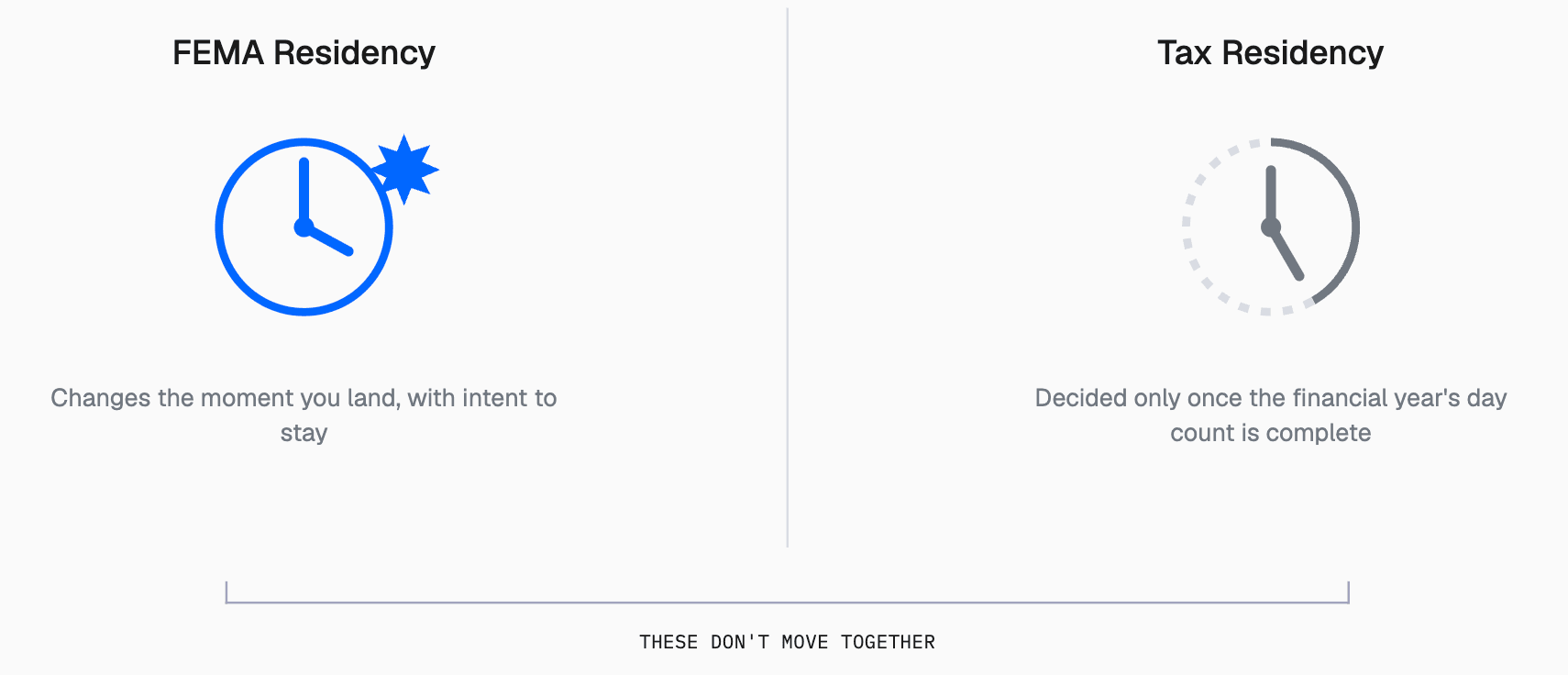
Residency isn't a status you earn once and keep. It's recalculated fresh for every financial year based on that year's day count alone.
You can be an NRI one year and a resident the next, simply by spending more time in India, a business trip that runs long, an extended family visit, a delayed return. There's no assumption that last year's status carries forward. Each year stands on its own count.
You'll hear three terms used in this space, and it's worth placing all three now, even though we focus on only the first here.
Non-Resident (NRI) is the status this entire module is about: someone who fails the residency day-count test and is, for tax purposes, outside the Indian system except for what's specifically sourced here.
Resident and Ordinarily Resident (ROR) is the status assumed everywhere else in this course, someone who passes the residency test and has been substantially present in India for years, taxed on worldwide income.
Resident but Not Ordinarily Resident (RNOR) is a transitional status that applies briefly, for newly-returning NRIs. It sits between the other two, and understanding it properly requires understanding NRI status first. For now, simply know it exists and that it isn't something this module covers. If the law recognizes you as an RNOR, we have a separate section for you here.
Your NRI status is decided by a day count against India's financial year, reassessed annually, with no assumption that one year's status determines the next. With that settled, the next chapter turns to the single rule that makes NRI taxation a genuinely different system rather than a variation on resident rules: what India actually chooses to tax you on.
One question. Less than 10 seconds.
Reinforce what you've learned before continuing to the next chapter.