



Indian investors are increasingly turning to global commodities for strategic diversification and growth.
This interest is partly driven by the recent rally in metal prices and the growing hype surrounding them.
Irrespective of recent market noise, commodities should form a core part of any robust long-term portfolio.
They act as a critical counterweight to financial assets, offering protection against currency devaluation while providing exposure to global industrial cycles.
This guide breaks down the key metals you should consider, from precious metals to industrial powerhouses, and explains how you can invest in them from India.
Table of Contents
Top Metal ETFs Indians Can Invest In
| Why? | Top Funds | |
|---|---|---|
| Gold | Acts as a hedge against currency debasement and rising government debt. | Top Gold ETFs |
| Silver | Irreplaceable for solar panels. Exploding green demand is colliding with a 6-year supply deficit. | Top Silver ETFs |
| Copper | Critical for wiring AI data centers and EV grids. Supply is stuck due to 17-year mine delays. | Top Copper ETFs |
| Aluminum | Essential for light-weighting electric vehicles to extend range. China has capped production, creating a shortage. | Top Aluminum ETFs |
| Zinc | Required to galvanize steel for bridges and wind turbines. Smelter closures in Europe are tightening global supply. | Top Zinc ETFs |
| Platinum | The primary catalyst for green hydrogen fuel cells. Supply is choked by political instability in South Africa. | Top Platinum ETFs |
| Palladium | Has no scalable substitute for hybrid car catalysts. Supply is dangerously concentrated in Russia and South Africa. | Top Palladium ETFs |
For Gold and Silver, domestic ETFs are available, but they often come with high fees and tracking errors. Global funds are a better choice because they are significantly cheaper and track the global price more accurately.
For other metals like Copper and Zinc, domestic options are practically non-existent. Indian investors mostly have to choose between buying manufacturing stocks (which depend on company performance) or trading complex futures contracts. Global ETFs provide a simpler alternative: they allow you to invest directly in the metal price at a lower cost, without the extra risks involved in picking stocks or managing contract expiries.
Investing in Gold

Investors are flocking to gold today not just for safety, but because of "Fiscal Dominance." As governments worldwide print money to fund massive debts, the purchasing power of cash declines. Gold preserves your wealth against this devaluation.
How Can Indians Invest in Gold?
Historically, Indian investors relied on physical jewelry or domestic gold ETFs.
Global Gold ETFs are the superior alternative because of the following reasons:
- Lower Cost: Global ETFs charge as little as 0.12%, compared to the 3-6% spreads charged by "Digital Gold" apps.
- Instant Liquidity: You can buy or sell instantly on the London Stock Exchange without worrying about "issue windows."
- Currency Hedge: You own the asset in USD or GBP, protecting you if the Rupee depreciates.
Top Gold Funds You Can Invest In
- iShares Physical Gold ETC (IGLN): Listed in London. The most tax-efficient route for Indians (avoids US Estate Tax).
- SPDR Gold Shares (GLD): The world's largest and most liquid gold ETF, listed in the US.
- VanEck Gold Miners ETF (GDX): Invests in gold mining companies (like Newmont) for aggressive growth rather than just safety.
To learn more about how you can invest in Gold and which fund is right for you, read our detailed guide here: Investing in Gold ETFs
Investing in Silver
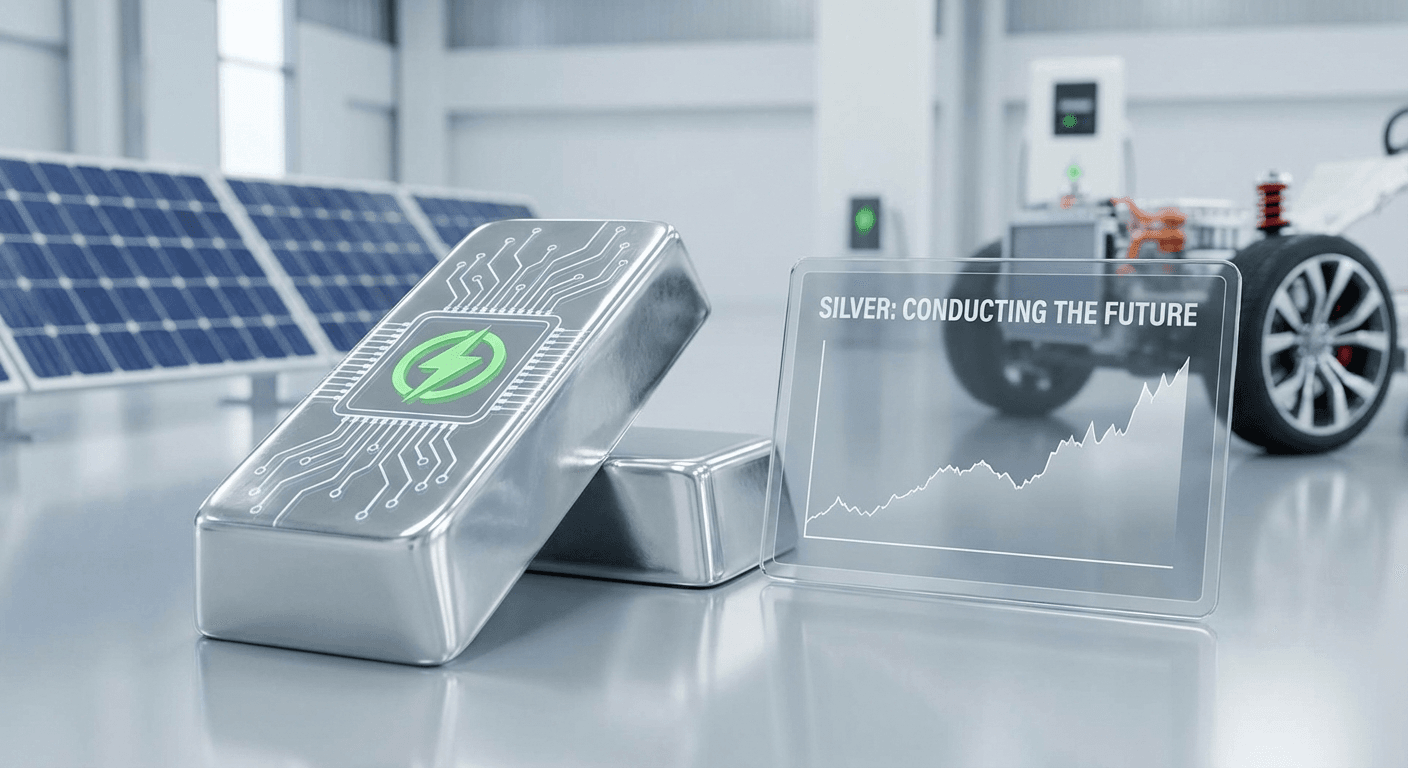
Silver is the most conductive metal on earth, and irreplaceable for the green energy transition. The solar industry alone is projected to consume nearly 20% of the global supply by 2027.
This surging industrial demand, combined with a six-year supply deficit, makes Silver a high-growth asset. It offers the protection of precious metals but with significantly higher upside potential than Gold.
How Can Indians Invest in Silver?
Investing in physical silver is inefficient because it is bulky, requires expensive storage, and tarnishes over time. Domestic Silver ETFs often suffer from high fees and tracking errors.
Global Silver ETFs solve these problems by offering a liquid, low-cost alternative. They allow you to hold the metal without the headaches of storage or the high fees often associated with Indian funds.
- Pure Price Tracking: Funds listed in London track the spot price with extreme precision.
- Lower Cost: Global ETCs have expense ratios as low as 0.20%, roughly half the cost of Indian alternatives.
- No Storage Risk: You own the metal without worrying about oxidation or theft.
Top Silver Funds You Can Invest In
- iShares Physical Silver ETC (SSLN): Listed in London. The most tax-efficient route for Indians (avoids US Estate Tax).
- iShares Silver Trust (SLV): The world's most liquid silver fund, listed in the US.
- Global X Silver Miners ETF (SIL): Invests in a basket of the top 30+ global silver miners for diversified industry exposure.
To learn more about how you can invest in Silver and which fund is right for you, read our detailed guide here: Investing in Silver ETFs
Investing in Copper

Copper is essential for two massive growth engines: AI Data Centers and the Green Energy Transition.
- AI Demand: A single hyperscale data center requires thousands of tons of copper for wiring and cooling.
- Green Energy: Electric Vehicles (EVs) use 4x more copper than gas cars.
Despite this exploding demand, supply is stuck. It takes an average of 17 years to bring a new copper mine online. This supply crunch creates a powerful long-term growth opportunity for investors.
How Can Indians Invest in Copper?
There are no dedicated Copper ETFs on Indian exchanges. You can buy stocks like Hindalco or Vedanta, but these are diversified conglomerates, meaning you also get exposure to Aluminum, Zinc, or Oil, diluting your copper bet.
Global Copper ETFs are the only way to get pure exposure. They offer:
- Pure Play Funds: You can invest in funds that track the copper price directly or baskets of pure copper mining companies.
- Targeted Exposure: You avoid the "baggage" of other commodities that comes with Indian stocks.
- Direct Access: You can buy shares of global giants (like Antofagasta in London) that are not listed in India.
Top Copper Funds You Can Invest In
- WisdomTree Copper (COPA): A price-tracking fund listed in London.
- Global X Copper Miners UCITS ETF (COPX): Invests in a basket of global copper mining companies.
- Antofagasta (ANTO): A major copper mining stock listed on the London Stock Exchange.
To learn more about how you can invest in Copper and which fund is right for you, read our detailed guide here: Investing in Copper ETFs
Investing in Aluminum

Investors are looking at Aluminum for three key reasons: Green Energy, EV Adoption, and Supply Caps.
It is aggressively replacing copper in Solar Panels and Power Grids because it is lighter and more cost-effective. In Electric Vehicles, it is essential for reducing weight to extend battery range.
Meanwhile, China (the world's largest producer) has capped production to meet climate goals.
How Can Indians Invest in Aluminum?
There are no dedicated Aluminum ETFs in India. You can buy stocks like Hindalco, but it is primarily a manufacturer of cans and car parts, meaning its profits rely on margins, not just the metal price.
Global aluminum ETFs and stocks allow you to bypass these manufacturing risks and invest directly in aluminum. They give you access to:
- Pure Price Exposure: Buy funds in London that track the global price of Aluminum directly.
- Upstream Miners: Invest in companies like Alcoa that mine the metal, offering higher leverage to price spikes.
- Green Aluminum: Invest in European companies producing "low-carbon" aluminum, which commands a premium price.
Top Aluminum Funds You Can Invest In
- WisdomTree Aluminium (ALUM): A price-tracking fund listed in London.
- Alcoa Corp (AA): The largest US aluminum producer, offering pure large-cap exposure.
- Norsk Hydro (NHYDY): A leader in "Green Aluminum" produced using hydropower.
To learn more about how you can invest in Aluminum and which fund is right for you, read our detailed guide here: Investing in Aluminum ETFs
Investing in Zinc

Every time a country builds a bridge, a railway network, or a 5G tower, they need Zinc to ensure it lasts. It is also critical for the Green Energy transition: offshore wind turbines require massive amounts of Zinc to survive in harsh marine environments.
While demand is rising from global infrastructure projects, supply is shrinking. High energy prices have forced many smelters to close, creating a structural deficit.
How Can Indians Invest in Zinc?
India has one of the world's best zinc companies: Hindustan Zinc (HZL). However, relying on a single stock is risky; if the company faces a labor strike or regulatory issue, your investment falls even if zinc prices are soaring.
Global markets offer a cleaner alternative. They allow you to bypass these manufacturing risks and invest directly in Global ETFs and stocks offer:
- Pure Price Exposure: You can buy funds in London that track the Zinc price directly, removing company management risks.
- Diversification: Instead of betting on one Indian company, you can invest in global giants like Glencore that operate worldwide.
- Broad Exposure: Because Zinc is volatile, you can buy "Broad Commodity" funds that bundle Zinc with Copper and Aluminum for a smoother ride.
Top Zinc Funds You Can Invest In
- WisdomTree Zinc (ZINC): A price-tracking fund listed in London.
- Glencore (GLEN): The world's largest commodity trader and a massive zinc producer, listed on the London Stock Exchange.
- WisdomTree Broad Commodities (PCOM): A diversified fund that gives you exposure to Zinc, Copper, and Energy in a single click.
To learn more about how you can invest in Zinc and which fund is right for you, read our detailed guide here: Investing in Zinc ETFs
Investing in Platinum

Investors are buying platinum due to these demand drivers:
- The Green Hydrogen Economy: Platinum is the primary catalyst for Hydrogen fuel cells. As green hydrogen projects go live in 2026, industrial demand is creating a new price floor.
- The Supply Choke: 75% of the world's supply comes from South Africa, a region facing severe electricity crises and labor strikes. A single week of disruption can send global prices soaring.
How Can Indians Invest in Platinum?
Indian investors have zero options for investing in platinum domestically. There are no Platinum ETFs on the NSE or BSE. Buying physical bars is inefficient due to high premiums and "making charges" that eat into your returns.
Global Markets offer the only viable route and offers:
- Efficient Access: You can buy the metal as a liquid financial asset with expense ratios as low as 0.20%.
- Liquidity: You can sell your position instantly during market hours, unlike the hassle of finding a buyer for a physical bar.
- Mining Leverage: You can invest in global miners like Sibanye-Stillwater to get exposure to the operational profits of the industry.
Top Platinum Funds You Can Invest In
- iShares Physical Platinum (IPLT): A physically-backed fund listed in London. Note: Buying this version avoids US Estate Tax.
- abrdn Physical Platinum Shares (PPLT): A popular US-listed ETF (though more expensive than its London counterpart).
- Sibanye-Stillwater (SBSW): A major mining company that owns the Stillwater mine in the USA, providing a rare hedge against South African political risk.
To learn more about how you can invest in Platinum and which fund is right for you, read our detailed guide here: Investing in Platinum ETFs
Investing in Palladium
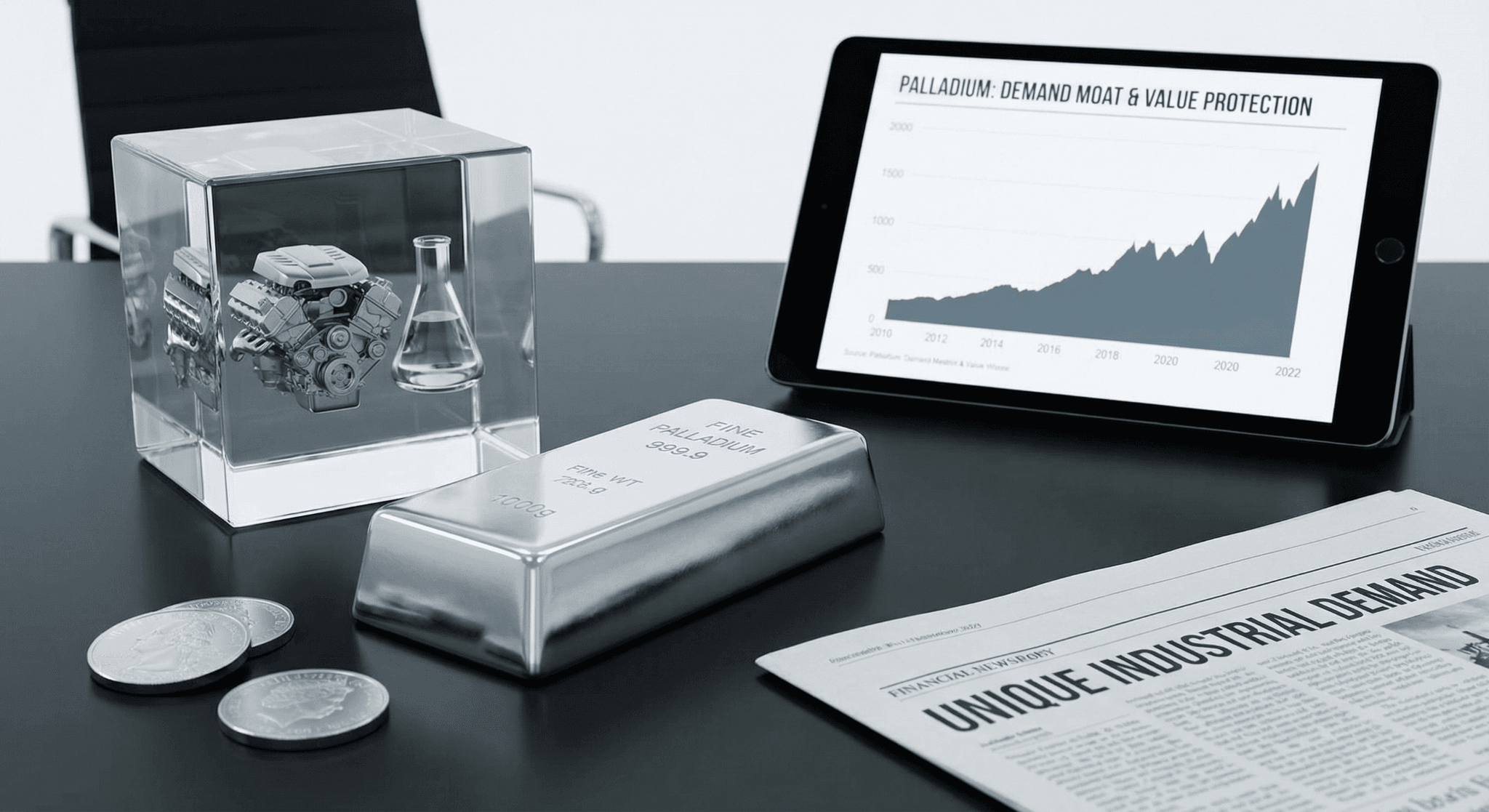
In the automotive and chemical sectors, Palladium has no scalable substitute. This uniqueness creates a "demand moat" that protects its value even during economic downturns.
How Can Indians Invest in Palladium?
There are no Palladium ETFs listed in India. The only domestic option is trading Futures on the MCX, which are complex, leveraged contracts designed for traders, not long-term investors.
Global Markets allow you to invest in Palladium as a simple asset with:
- Physical Ownership: You can buy funds in London that hold actual palladium bars in secure vaults.
- No Expiry: Unlike MCX futures, these funds are designed for long-term holding.
- Mining Exposure: You can invest in major producers like Sibanye-Stillwater to capture the operational profits of the industry.
Top Palladium Funds You Can Invest In
- WisdomTree Physical Palladium (PHPD): A physically-backed fund listed in London. Note: Buying this version avoids US Estate Tax.
- Aberdeen Standard Physical Palladium Shares (PALL): The largest palladium ETF in the world, listed in the US.
- Sibanye-Stillwater (SBSW): One of the world's largest producers, with major mines in both the US and South Africa.
To learn more about how you can invest in Palladium and which fund is right for you, read our detailed guide here: Investing in Palladium ETFs
Investing in Commodities with Paasa
Paasa is a global investing platform designed for Indian investors.
Paasa solves the access gap to commodities by giving you direct access to over 10 global exchanges, including the United Kingdom, Canada, Japan, and Germany.
This allows you to invest in a wide range of Global Commodity ETFs, including tax-efficient European funds.
The Compliance Advantage
Paasa makes global investing easy and removes the compliance friction with a specialized layer built specifically for Indian residents:
- Schedule FA Reporting: We generate the exact reports you need for your Indian tax returns, eliminating the need for manual calculations.
- Tax Filing & Advice: Get access to expert tax advice and seamless filing support to handle your global capital gains and dividends.
- FEMA & LRS Integration: We provide guidance on FEMA regulations and LRS limits to ensure compliance.
Paasa also provides access to managed strategies, along with remittance, FEMA and tax advisory.
Disclaimer
This article is intended for information only and does not constitute investment, tax, or legal advice. The material is based on public sources and our interpretation of current market conditions, which may change. Investing in global markets entails risks, including currency risk, political risk, and market volatility. Please seek advice from qualified professionals before acting.

